“Durable Foam Structure Inspired by Pomelos” by AskNature / Biomimicry researchers, source: “AskNature.org”
4. Culturi hidroponice de apartament/balcon article
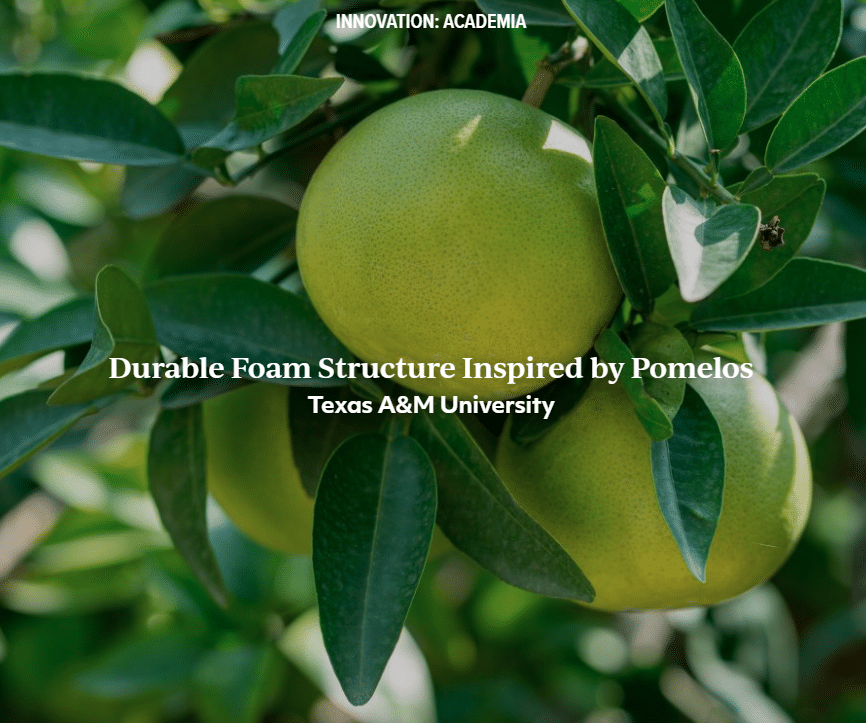
Nature’s engineering genius inspires the next generation of insulating foams modeled after the pomelo fruit peel (Citrus maxima), as highlighted on askNature.org. The pomelo’s thick, protective rind features a hierarchical structure of air-filled cells, pressurized struts, and varying pore sizes that dissipate impact energy remarkably well—protecting the delicate fruit from falls of up to 10 meters.
Scientists have reverse-engineered this into bioinspired foams with nonuniform pore distribution (often using Voronoi tessellation modeling). When compressed, the pores collapse progressively, absorbing shock and vibration far better than uniform synthetic foams. This translates to exceptional thermal and acoustic insulation, impact resistance, and lightweight durability.
These foams outperform traditional polystyrene or polyurethane in energy dissipation while being more sustainable. Production can incorporate recycled or bio-based polymers, reducing fossil fuel dependency and enabling biodegradability in some designs. Applications range from protective packaging and automotive cushioning to building insulation panels and sports equipment.
Benefits include superior thermal performance (trapping air like the pomelo), noise reduction, and resilience under repeated stress—ideal for earthquake-prone or high-traffic areas. They also offer better fire resistance and lower toxicity potential compared to some conventional foams.
Real-world research from institutions like Texas A&M has produced prototypes demonstrating these advantages. As industries seek low-carbon alternatives, pomelo-inspired foams support green building standards and circular design.
Challenges involve scaling cost-effective manufacturing, but advances in 3D printing and additive manufacturing accelerate adoption. The future? Smart foams that adapt to environmental conditions or integrate with mycelium composites for fully bio-based solutions.
This askNature-inspired innovation reminds us that billions of years of evolution provide blueprints for sustainable technology. Pomelo-peel foams are paving the way for buildings and products that are tougher, greener, and more efficient—proving biomimicry isn’t just clever, it’s essential