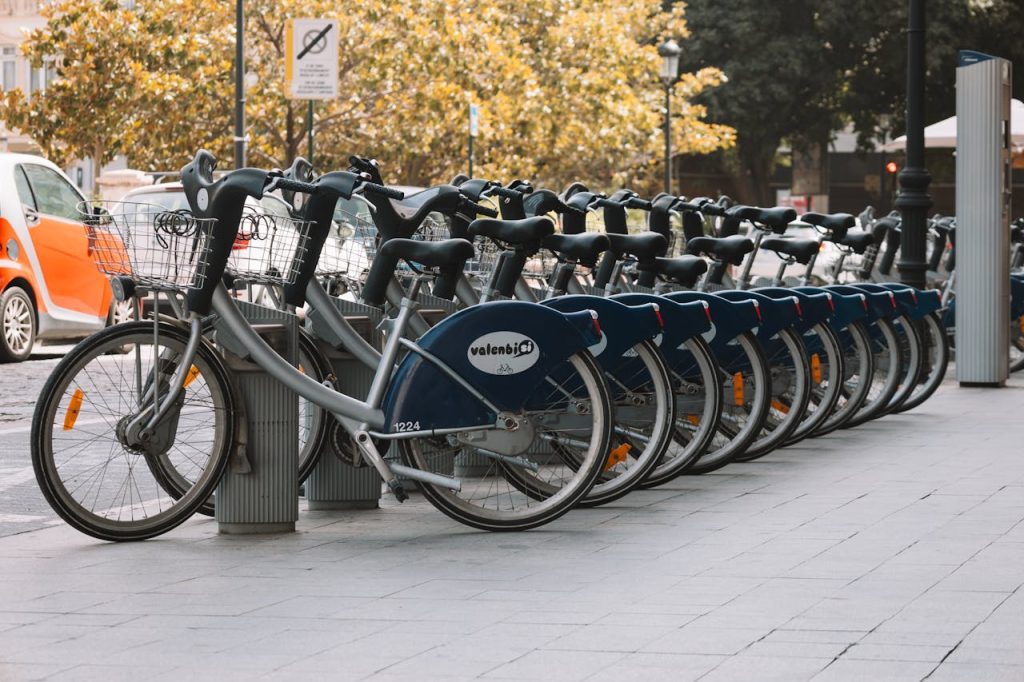
Sustainable mobility, climate action and the energy transition form interconnected pillars of urban strategies aimed at achieving climate neutrality, improving air quality, boosting energy efficiency, and creating livable, resilient cities. Cities, which house over 75% of the EU population and generate a large share of emissions, play a central role in the European Green Deal—the EU’s roadmap for a sustainable, climate-neutral economy by 2050.
Key EU Initiatives and Frameworks
Several EU initiatives provide structured guidance and support for cities:
- European Green Deal: This overarching strategy targets a 90% reduction in transport emissions by 2050 (part of the broader climate goals) through a Sustainable and Smart Mobility Strategy. It emphasizes zero-emission vehicles, multimodal transport, and urban transformations, including making at least 100 European cities climate-neutral by 2030.
- EU Mission: Climate-Neutral and Smart Cities (Cities Mission): Launched under Horizon Europe, this mission supports 112 cities (100 from EU Member States + 12 from associated countries) in reaching climate neutrality by 2030. These “Mission Cities” serve as experimentation and innovation hubs, helping all European cities achieve neutrality by 2050. Selected cities develop Climate City Contracts (CCCs)—co-created roadmaps with citizens, businesses, and stakeholders—that outline actions across sectors like energy, buildings, waste, and transport, plus related investment plans. Support comes via the NetZeroCities platform. By late 2025, over 100 cities had received the EU Mission Label for their plans.
- Sustainable Energy and Climate Action Plans (SECAPs): Under the Covenant of Mayors for Climate & Energy, local authorities commit to reducing GHG emissions (at least 40% by 2030 in earlier targets, aligned with EU goals), increasing energy efficiency and renewables, and enhancing climate adaptation/resilience. SECAPs include a baseline emissions inventory, risk/vulnerability assessment, and concrete measures in buildings, transport, local energy production, and adaptation. They address energy poverty and are monitored regularly. The Joint Research Centre provides updated guidebooks for development.
- Sustainable Urban Mobility Plans (SUMPs): These are the cornerstone of EU urban mobility policy. A SUMP is a strategic, participatory plan covering the entire functional urban area (city + commuting zone). It integrates all transport modes, prioritizes sustainable options (public transport, walking, cycling, shared mobility), and addresses congestion, pollution, safety, and accessibility while linking to broader urban planning. The EU strongly recommends SUMPs for cities of all sizes; revised TEN-T rules reinforce their role for urban nodes. Updated guidelines (e.g., 2019) and toolkits support implementation.
These tools align with the Sustainable and Smart Mobility Strategy and enable cities to meet Green Deal targets through integrated planning.
How Cities Bundle Actions into Coherent Project Pipelines
Urban strategies succeed by integrating actions across sectors rather than treating them in silos:
- Integrated Planning: SECAPs and SUMPs feed into Climate City Contracts. For example, mobility measures (e.g., electrifying public fleets, expanding cycling infrastructure, low-emission zones) directly support emission reductions in SECAPs and air quality improvements.
- Cross-Sector Synergies:
- Sustainable Mobility + Energy: Promote electric vehicles and public transport charged with local renewables; create energy communities or smart grids that manage demand from mobility.
- Air Quality + Climate: Reduce traffic emissions through modal shifts (away from private cars) and green infrastructure, which also aids adaptation (e.g., urban cooling).
- Energy Efficiency: Retrofit buildings, optimize district heating/cooling, and link to spatial planning for compact, mixed-use developments that shorten trips.
- Project Pipelines and Financing: Cities translate plans into actionable pipelines by prioritizing measures with high impact/cost-effectiveness, engaging stakeholders (citizens, businesses, academia), and leveraging multilevel governance. Tools include public procurement for green fleets, innovative financing (green bonds, EU funds), and monitoring via indicators (e.g., Sustainable Urban Mobility Indicators). The Cities Mission emphasizes turning CCCs into bankable projects with tailored support from NetZeroCities.
- Participation and Innovation: Co-creation ensures buy-in. “Smart” elements—digital tools, data-driven management, new technologies (e.g., connected/autonomous mobility)—accelerate progress while addressing equity and inclusion.
Practical Outcomes and Examples
- Mobility Focus: Many Mission Cities emphasize urban transport as a key sector, combining zero-emission tech, public/active mobility, and smart solutions to cut emissions and congestion.
- Broader Benefits: Improved air quality, public health, reduced noise, economic resilience, and better quality of life.
- Examples: Cities like those in Finland (e.g., Lahti, Tampere), Spain (Barcelona, Madrid, Valencia), Germany (Munich, Mannheim), and others have advanced plans. Mission Cities range from large metropolises to smaller ones, ensuring diverse learnings.
Challenges include financing gaps, governance coordination, and scaling innovations, but EU support (Horizon Europe calls, Cohesion Policy, Technical Support Instrument) and platforms like NetZeroCities help overcome them.
In summary, urban strategies link Green Deal ambitions to local action via SECAPs, SUMPs, and Climate City Contracts under the Cities Mission. By bundling mobility, energy, and climate measures into integrated pipelines—with strong stakeholder involvement—cities can deliver measurable progress toward climate neutrality, cleaner air, and efficient, people-centered urban systems. This approach not only meets EU targets but pioneers solutions scalable across the continent by 2050.