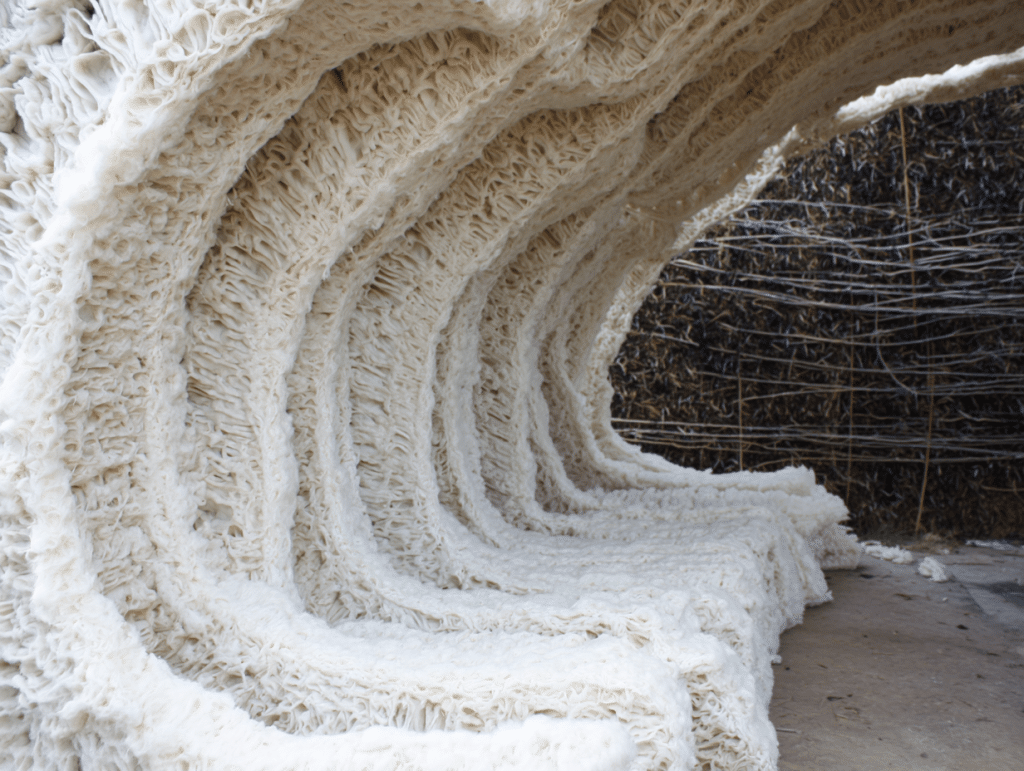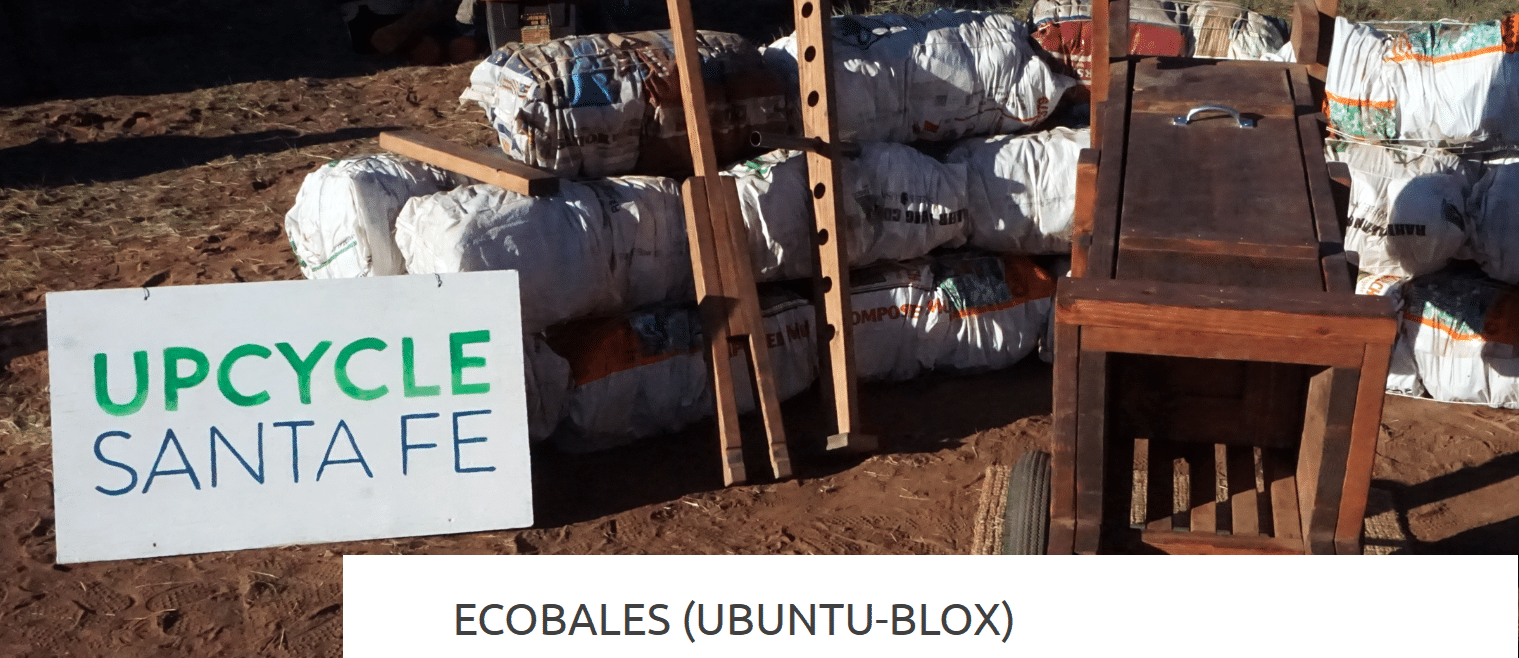
“Ubuntublox / Ecobales & Corrugated Cardboard Pod” by Plan for Plastic / Rural Studio, source: “PlanForPlastic.org”
A cluster of innovative eco-products—Airless packaging, Ubuntublox, Corrugated Cardboard Pod, and PHZ2—demonstrates diverse paths to waste reduction in packaging and construction.
Airless systems (refillable pumps and bottles) minimize product waste and use recyclable mono-materials (PP/PET), extending shelf life while cutting plastic use by up to 70% in some designs.
Ubuntublox (and Ecobales) compress post-consumer plastic waste into dense, sanitized building blocks via manual or simple presses. Used for walls, schools, and community structures, they divert trash from landfills and empower local building in resource-scarce areas.
Corrugated Cardboard Pod (Rural Studio) experiments with wax-impregnated cardboard bales as load-bearing insulation and foundation elements—lightweight, low-cost, and highly insulating for experimental housing.
PHZ2 (Dratz&Dratz Architekten) employs compressed recycled paper bales for monolithic temporary workspaces and structures, showcasing paper’s potential as a sustainable, insulating building material.
Collectively, these solutions close material loops: Airless for packaging, the others for construction. Benefits include drastic waste reduction, lower embodied carbon, affordability, and community scalability.
Applications span consumer goods, emergency housing, pop-up architecture, and green building prototypes.
Challenges involve standardization and long-term durability, yet success stories prove viability.
Together, they illustrate a multi-pronged approach to sustainability—reusing everyday waste for functional, beautiful outcomes. Ideal for zero-waste brands and eco-builders.