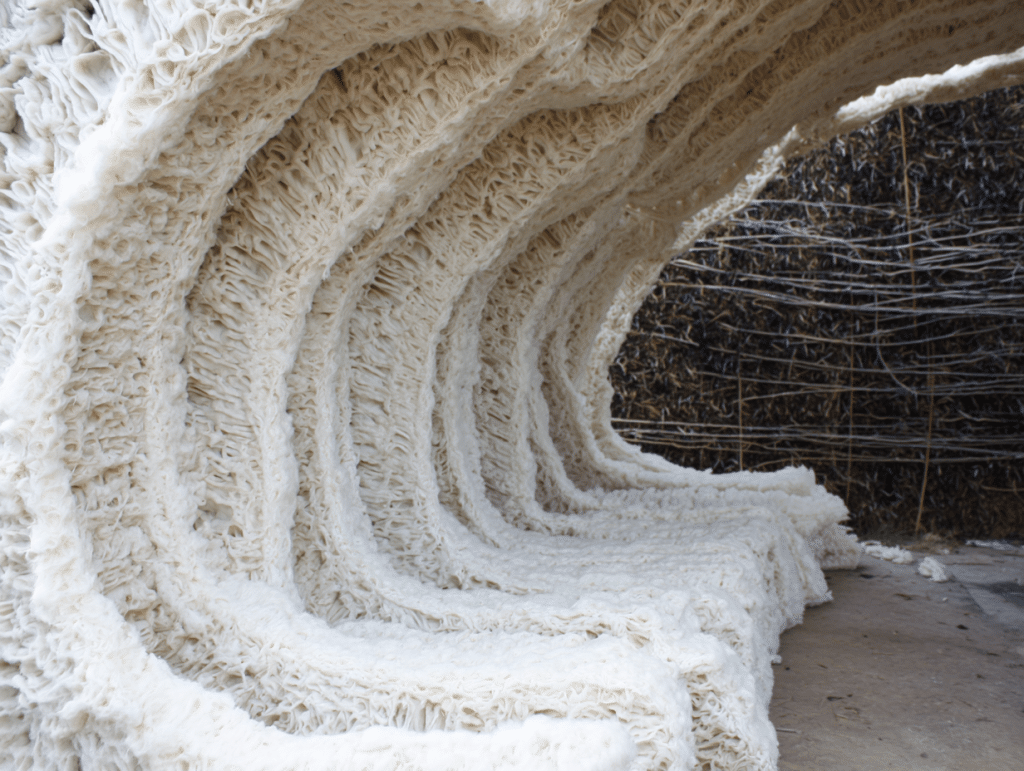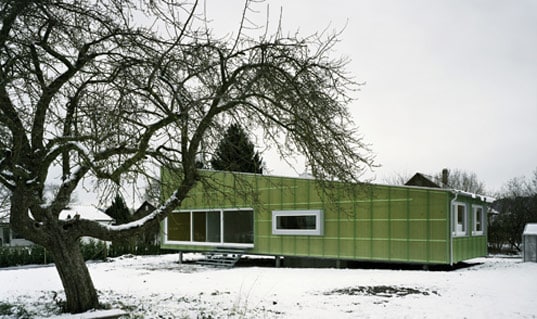
Featured image: Close-up or interior view of compressed straw panels / strawboard in a modern wall or ceiling application (showing texture, layering, and contemporary finish—clean, warm, and architectural). Citation: “Strohhaus Prefab Straw Panels” by Felix Jerusalem / Strohhaus, source: “Inhabitat or Strohhaus”.
Straw-based materials and reconfigurable biocomposites represent a powerful return to renewable agricultural resources while embracing modern engineering for high-performance, circular construction. From traditional straw-bale building to advanced prefabricated panels and biocomposites, these solutions turn farm byproducts into durable, insulating, and low-carbon building elements.
Strohhaus in Switzerland exemplifies modern straw construction. Prefabricated compressed strawboard panels (formaldehyde-free) form the primary structure and insulation of energy-efficient homes. Companies like Strawjet, Strawtec, and Stropoly produce straw panels or bales optimized for rapid assembly, excellent thermal and acoustic performance, and fire resistance when properly rendered or treated. Straw sequesters carbon during growth and requires minimal processing energy, resulting in dramatically lower embodied carbon compared to concrete, steel, or mineral wool.
UPM Biocomposites push the frontier further by creating wood-fiber or straw-based composites that incorporate renewable resins or recycled plastics. These materials offer the workability of wood with enhanced durability, moisture resistance, and strength. They replace traditional composites in facades, decking, furniture, and interior finishes. Reconfigurability is a key advantage—modular designs allow disassembly and reuse, extending material lifecycles and supporting true circularity.
Biocomposites made from straw or agricultural residues can be molded, 3D-printed, or pressed into custom shapes. Advances in natural binders and treatments make them competitive with synthetics while remaining biodegradable or industrially compostable at end-of-life. Some formulations achieve structural load-bearing capacity, enabling straw to move beyond infill to primary structural roles.
Environmental benefits are substantial: reduced landfill waste from crop residues, lower fossil fuel dependency, improved rural economies through value-added agriculture, and superior indoor air quality (no off-gassing). Straw’s natural properties provide excellent insulation (R-values often rival or exceed conventional materials) and humidity regulation, contributing to healthier, more comfortable buildings.
Real-world applications include affordable housing, schools, community centers, and high-end eco-residences. Prefab straw systems speed construction timelines while cutting costs and emissions. In regions with abundant straw (wheat, rice, barley), local sourcing minimizes transport impacts.
Challenges include moisture management (addressed through proper detailing and coatings), standardization for building codes, and scaling supply chains. However, growing demand for certified green materials, combined with policy support for bio-based construction, is driving innovation and availability.
The future lies in hybrid systems—straw combined with mycelium, recycled plastics, or smart sensors for adaptive performance. Reconfigurable biocomposites enable buildings that evolve with needs, easily upgraded or repurposed rather than demolished.
Straw-based and reconfigurable biocomposites prove that sustainable materials need not compromise performance or aesthetics. By valorizing agricultural waste, they close nutrient and material loops, support regenerative agriculture, and help decarbonize the built environment. For architects, builders, and policymakers seeking genuine circular solutions, these materials offer practical, beautiful, and planet-positive pathways forward.