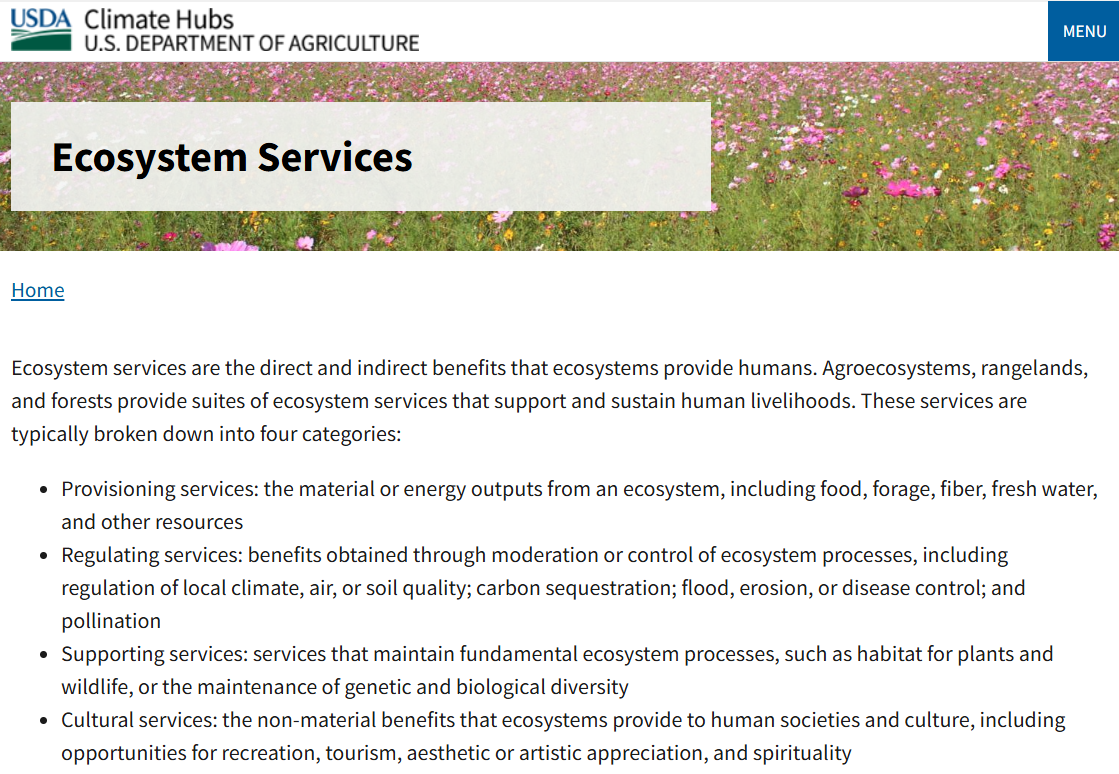
Featured image credit: Product by the U.S. Department of Agriculture Climate Hubs, source: USDA Climate Hubs – Ecosystem Services
Ecosystem services are the direct and indirect benefits that ecosystems provide to people. They include the food we eat, the water we drink, the air we breathe, and the natural processes that help keep climate, soils, and biodiversity functioning.
What Ecosystem Services Mean
Ecosystem services describe the ways nature supports human life and well-being. The concept helps show that forests, wetlands, rivers, soils, oceans, and wildlife are not only “natural features,” but active systems that deliver valuable services every day.
This idea is useful because many of these benefits are easy to overlook until they are lost. For example, clean water, pollination, flood protection, and soil fertility often depend on healthy ecosystems.
The Four Main Types
Ecosystem services are usually grouped into four categories: provisioning, regulating, cultural, and supporting services. Provisioning services are the material goods we take from ecosystems, such as food, timber, fiber, fuel, and fresh water.
Regulating services are the benefits gained from ecosystem processes that control natural conditions, including climate regulation, carbon storage, flood control, erosion control, air purification, and water filtration. Cultural services are the non-material benefits people receive from nature, such as recreation, tourism, aesthetic enjoyment, spiritual value, and inspiration. Supporting services are the underlying processes that make the other three possible, including soil formation, nutrient cycling, habitat provision, and primary production.
Why They Matter
Ecosystem services matter because they support almost every aspect of human well-being and the economy. Agriculture depends on pollination, fertile soil, and water regulation; cities depend on green spaces, flood protection, and heat reduction; and public health benefits from cleaner air, cleaner water, and better recreation opportunities.
They also matter because replacing these services artificially can be extremely expensive or impossible. Healthy ecosystems often provide the same benefits more efficiently and with more co-benefits than built infrastructure alone.
Ecosystem Services and Biodiversity
Biodiversity is the foundation of ecosystem services because diverse species and habitats make ecosystems more resilient and productive. When biodiversity declines, ecosystems often become less able to provide stable services such as pollination, pest control, carbon storage, and water purification.
That is why conservation is not only about protecting wildlife for its own sake. It is also about protecting the natural systems that support food security, climate adaptation, disaster risk reduction, and human health.
Real-World Examples
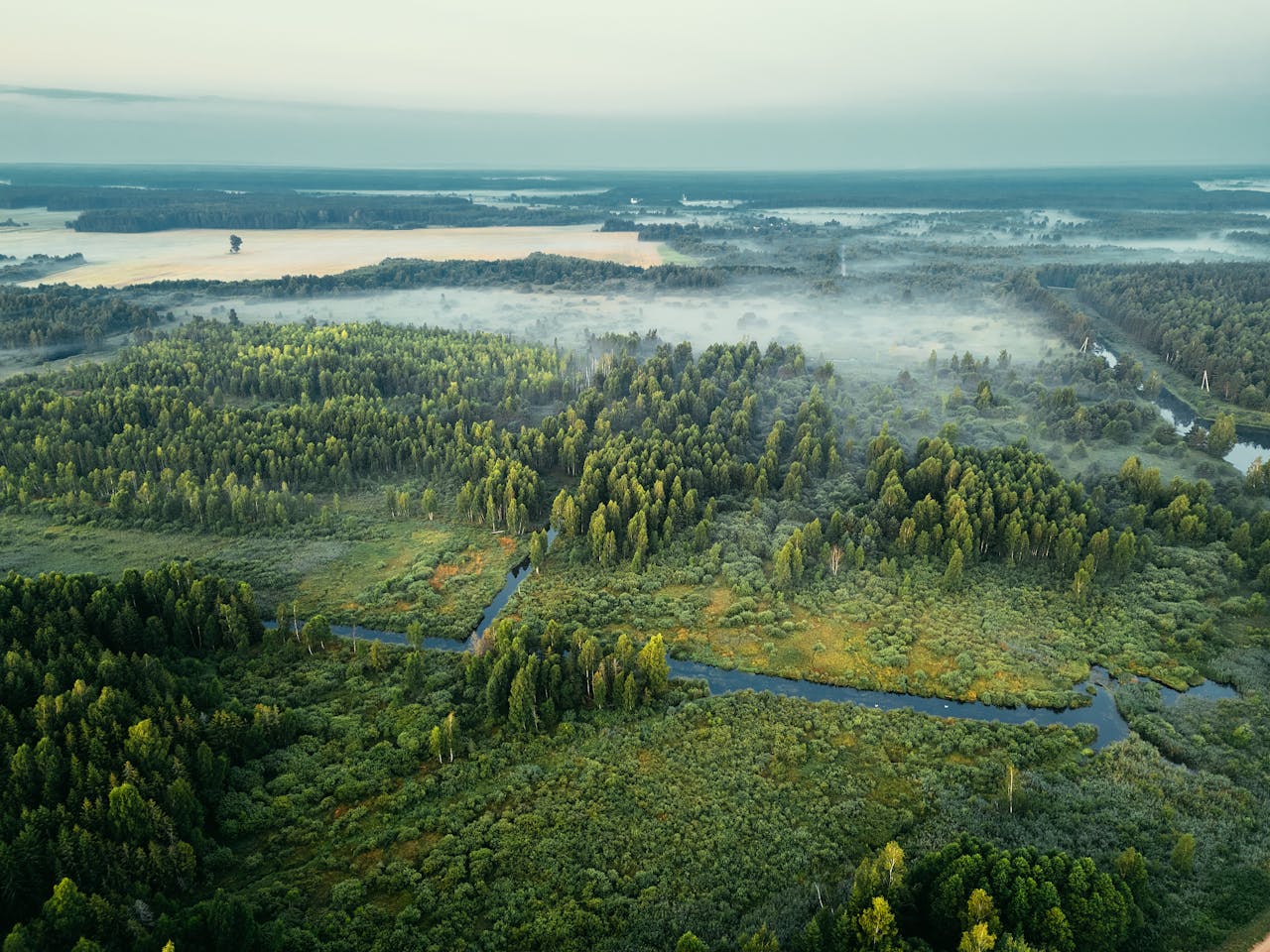
A forest provides timber, fuel, and recreation, while also storing carbon and regulating water flow. A wetland can filter pollutants, reduce floods, and provide habitat for birds and fish. Urban trees can cool neighborhoods, improve air quality, and make public spaces more livable.
These examples show that ecosystem services are not abstract environmental concepts. They are everyday benefits that affect how people live, work, eat, travel, and recover from climate stress.
Why the Concept Is Important
The idea of ecosystem services helps governments, planners, businesses, and communities make better decisions. By recognizing the value of nature’s contributions, they can compare development options more realistically and avoid costly environmental damage.
It also encourages a more balanced view of progress. Instead of treating nature as separate from the economy, ecosystem services show that environmental protection and human prosperity are closely linked.