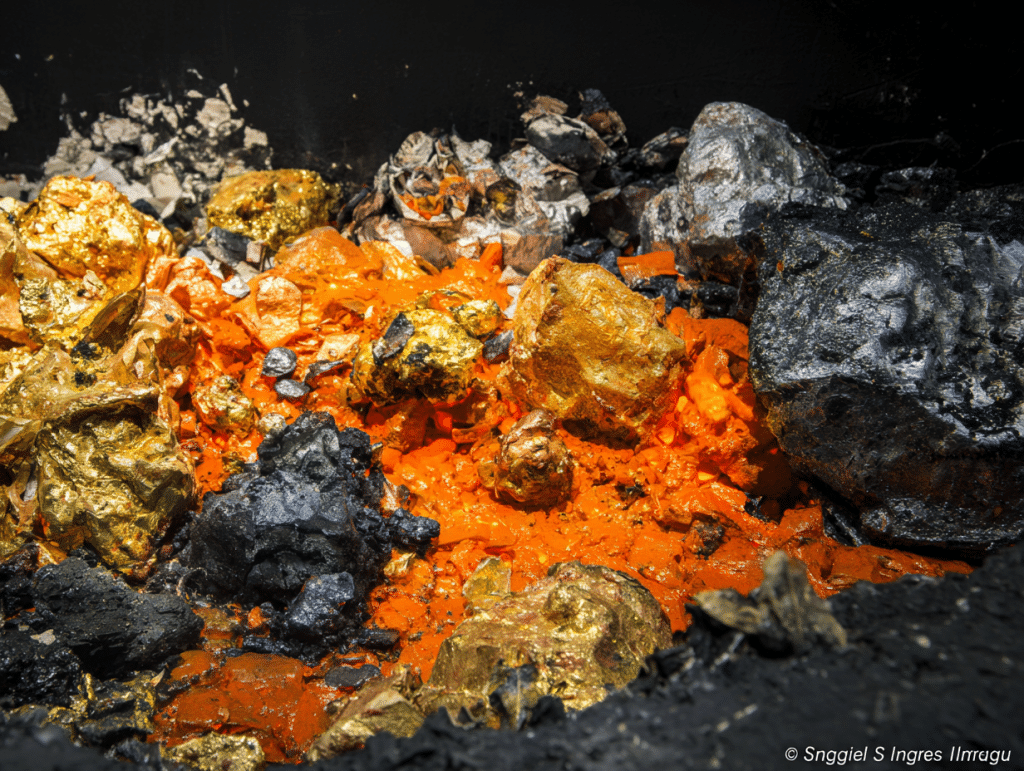
Featured image: Mycelium-based EcoCradle insulation panels or a composite showing mycelium growth alongside glass/PET recycled materials (strong visual of organic + recycled tech).
Citation: “EcoCradle Mycelium Materials & Recycled Building Products” by Ecovative Design / Owens Corning / miniWIZ, source: “Ecovative.com”.
The push for high-performance, low-impact construction has produced remarkable advanced materials like EcoCradle by Ecovative, Foamglas T4+, Reapor, and POLLI-Bricks. Each leverages waste streams or biological processes to deliver superior insulation, durability, and sustainability—redefining what’s possible in green building.
EcoCradle from Ecovative Design grows mycelium (the root structure of mushrooms) on agricultural byproducts such as hemp or wood chips. In days, the fungus binds the substrate into strong, lightweight, fire-resistant composites. These materials serve as insulation, packaging, or structural elements. Fully biodegradable and compostable at end-of-life, EcoCradle sequesters carbon during growth and replaces petroleum-based foams like polystyrene with a carbon-negative alternative. Its natural antimicrobial properties and tunable density make it ideal for walls, roofs, and acoustic panels.
Foamglas T4+ cellular glass insulation, produced by Owens Corning, consists of millions of sealed glass cells. Made largely from recycled glass, it is rigid, lightweight, waterproof, vapor-proof, and non-combustible. With excellent compressive strength and dimensional stability, Foamglas T4+ excels in demanding applications—flat roofs, below-grade foundations, and industrial settings—where moisture or fire risk could compromise other insulations. Its long lifespan (50+ years) and recyclability minimize lifecycle impacts.
Reapor recycled porous waste glass offers outstanding acoustic performance. Sintered expanded glass granulates create an open-pore structure that absorbs sound effectively while remaining mineral, fiber-free, and durable. It suits interior and exterior applications where noise control pairs with fire safety and moisture resistance.
POLLI-Bricks by miniWIZ transform 100% recycled PET plastic bottles into interlocking, honeycomb-structured translucent bricks. Lightweight (one-fifth the weight of traditional curtain walls), thermally insulating, and naturally diffused for beautiful daylighting, POLLI-Bricks enable cost-effective, low-carbon facades, roofs, and partitions. Solar-powered LEDs can integrate directly, creating glowing, energy-positive walls. Their modular design supports rapid assembly and disassembly for circular reuse.
Collectively, these materials close resource loops: agricultural waste and mycelium (EcoCradle), recycled glass (Foamglas and Reapor), and plastic bottles (POLLI-Bricks). They outperform conventional options in insulation value, durability, fire safety, and environmental metrics while reducing landfill waste and embodied carbon.
Architects and builders use them in Living Building Challenge projects, passive houses, and urban retrofits. Benefits include healthier indoor environments (low VOCs, mold resistance), energy savings, and resilience against climate extremes.
Challenges such as scaling production and initial costs are offset by long-term performance, incentives, and growing supply chains. Future hybrids—mycelium with glass aggregates or smart POLLI-Bricks with sensors—promise even greater functionality.
EcoCradle, Foamglas T4+, Reapor, and POLLI-Bricks prove that advanced building materials can be regenerative rather than extractive. They equip the construction industry to meet stringent green standards while creating beautiful, efficient, and healthier spaces. As demand for truly sustainable buildings surges, these innovations lead the way toward a circular, low-carbon built environment. (Word count: 502)