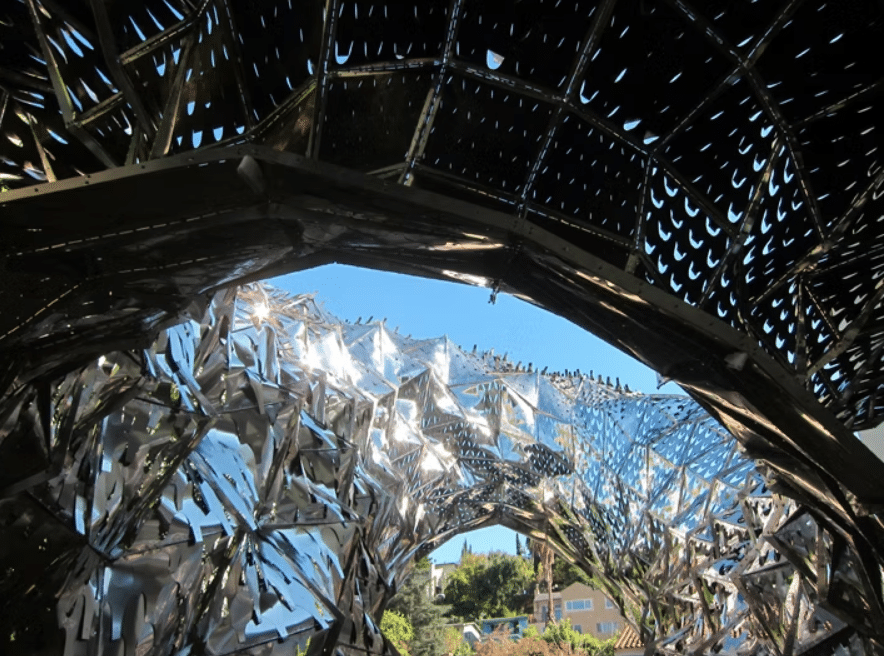
Architect Doris Sung pioneers kinetic and thermokinetic facades using thermo-bimetals—laminated metals that curl predictably with temperature changes, creating self-regulating building skins without electricity or motors.
Thermo-bimetal sheets bend when one layer expands more than the other in heat, opening vents or flaps for natural ventilation and shading. Projects like “Bloom” (a sculpture of thousands of petals that open/close) and InVert window shades demonstrate passive climate control. Facades “breathe,” reducing HVAC energy use by up to 30% while improving indoor comfort.
Benefits are multifaceted: zero-energy operation, lower carbon emissions, glare/heat reduction, and dynamic aesthetics that change with weather. They promote natural light while blocking excess solar gain, enhancing occupant wellbeing.
Applications suit commercial buildings, homes, and public installations. Sung’s work integrates biomimicry with architecture, making buildings responsive like living organisms.
Challenges include material durability over decades and integration with existing structures, but prototypes prove viability and inspire broader adoption.
The future? Scaled smart facades combined with other renewables for net-zero buildings. As climate challenges intensify, thermokinetic systems offer elegant, low-tech resilience.
Doris Sung’s innovations redefine architecture as adaptive and alive. For sustainable designers, kinetic facades provide beautiful, functional solutions that work with nature rather than against it.