
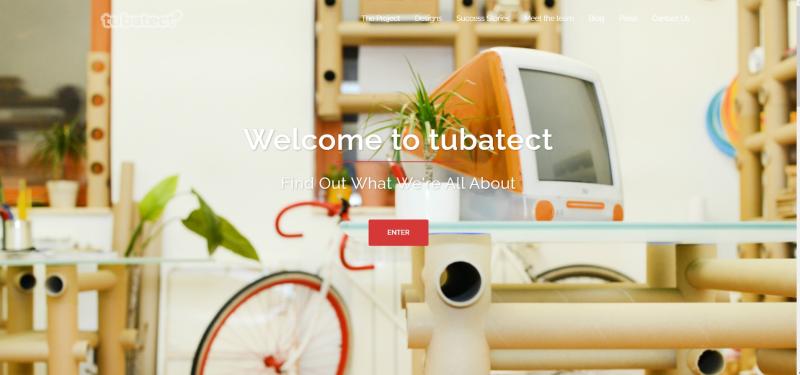
Tubatect, a circular economy project initiated by architect and researcher Ionuț Adrian Ibric, transforms waste from printing centers—cardboard tubes, cartridges, and related materials—into durable, innovative office furniture and design objects. This CSR-focused initiative exemplifies upcycling at its best: turning industrial byproducts into high-value, functional products while reducing landfill waste and promoting responsible consumption.
Printing centers generate significant volumes of cylindrical cardboard tubes and plastic components that are typically discarded. Tubatect collects and processes these materials, combining them with minimal additional inputs to create desks, shelving, partitions, storage units, and creative workspace elements. The resulting furniture is lightweight, sturdy, customizable, and aesthetically distinctive—often retaining the tubular forms or layered textures that tell the story of their origins.
Adrian Ibric’s design philosophy integrates ecological responsibility with innovation. Tubatect pieces emphasize modularity for easy reconfiguration, repair, and end-of-life recycling. By minimizing virgin materials and avoiding toxic adhesives where possible, the project achieves low embodied carbon and supports healthier indoor environments. It also raises awareness about hidden waste streams in everyday industries like printing.
Social and economic impacts are significant. The project creates value chains involving waste collectors, designers, and manufacturers, potentially generating local jobs in upcycling. As a research-driven initiative linked to Ibric’s work at the Ion Mincu University of Architecture and Urban Planning, Tubatect serves as both a practical solution and an educational model for circular design.
Applications suit modern offices, co-working spaces, schools, and creative studios seeking sustainable, unique interiors. The furniture’s industrial-chic aesthetic appeals to eco-conscious brands and professionals who value storytelling in design. Tubatect has received recognition for its innovative approach to waste valorization and has been featured in sustainability discussions and awards.
Environmental benefits include diversion of bulky waste, reduced demand for new timber or plastics, and lower overall carbon footprint compared to conventional furniture production. The project aligns with EU circular economy directives and global goals for responsible production and consumption.
Challenges involve scaling collection logistics, ensuring consistent material quality, and market education. Ibric addresses these through partnerships, design optimization, and demonstration projects.
The future of Tubatect could include expanded product lines, digital customization tools, or integration with other waste streams for hybrid materials. It inspires broader adoption of upcycling in design education and industry.
Tubatect by Adrian Ibric beautifully illustrates how targeted innovation can solve waste problems while creating desirable objects. It encourages businesses and individuals to rethink “trash” as a resource, fostering a more circular, creative, and sustainable economy—one piece of furniture at a time.

