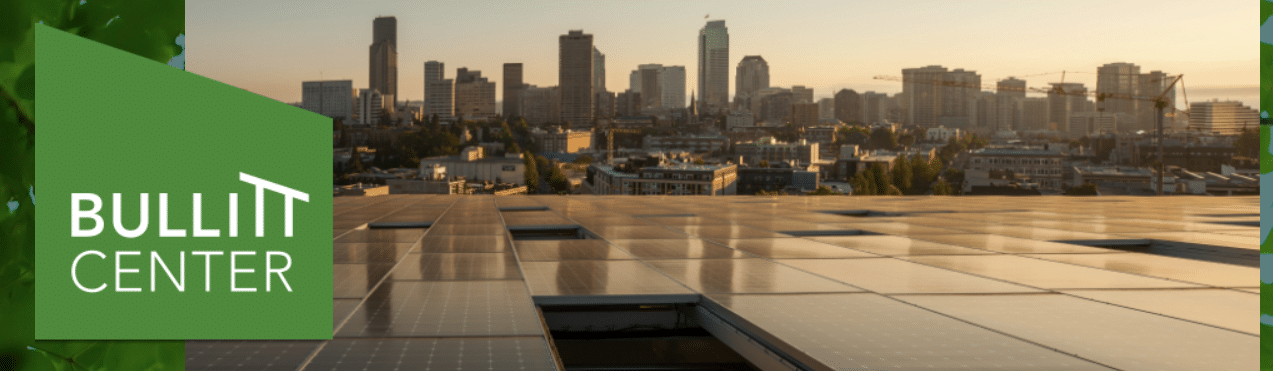
Featured image: Exterior view of the iconic Bullitt Center building with its prominent solar array and green design features (strong hero image representing the group of technologies). Link: https://bullittcenter.org/building/photo-gallery/ Citation: “Bullitt Center” by Bullitt Center / Bullitt Foundation, source: “BullittCenter.org”. (hyperlink the citation to https://bullittcenter.org/building/photo-gallery/)
These four innovations exemplify the pinnacle of sustainable design, each pushing boundaries in energy efficiency, resource conservation, and biomimicry to create a more regenerative built environment and transportation sector.
The Bullitt Center in Seattle, often called the “greenest commercial building in the world,” achieved Living Building Challenge certification. Completed in 2013, this six-story structure generates all its energy on-site via a massive rooftop solar array, harvests rainwater for all water needs, and features composting toilets that turn waste into nutrient-rich soil. It uses no toxic materials, prioritizes natural daylight and ventilation, and demonstrates that high-performance green buildings are not only feasible but desirable for occupants and developers alike. Its success has inspired similar projects globally, proving net-positive buildings can thrive in urban settings while slashing operational carbon emissions to near zero.
Friction-reducing ship coatings draw inspiration from nature—such as shark skin denticles or tuna’s mucous layers—to minimize hydrodynamic drag. Modern hydrogel or nanostructured coatings create a slippery boundary layer that reduces fuel consumption by 5-10% or more on large vessels. Companies like Nippon Paint Marine have developed biomimetic solutions that also prevent biofouling, further cutting maintenance and emissions. With shipping responsible for nearly 3% of global CO₂, these coatings offer immediate, scalable climate impact without major engine overhauls.
RavenWindow produces thermochromic smart glass that automatically tints in response to heat and sunlight, eliminating the need for external shades or constant HVAC adjustments. This passive technology reduces solar heat gain, glare, and UV damage while maintaining views and natural light. Buildings equipped with RavenWindow can achieve significant energy savings (up to 30% on cooling loads) with no electricity required for tinting—making it ideal for both retrofits and new construction.
Flectofin, a hingeless louver system from the University of Stuttgart (featured on AskNature), mimics plant movements like those in the bird-of-paradise flower. Elastic deformation allows fins to flap open or close in response to pressure or temperature without mechanical hinges, bearings, or motors. This biomimetic shading and ventilation system is durable, low-maintenance, and highly efficient for dynamic facades.
Together, these technologies demonstrate holistic green innovation: the Bullitt Center shows whole-building integration; ship coatings address maritime emissions; RavenWindow and Flectofin provide adaptive, passive building envelopes. They reduce energy demand, leverage natural principles, and prove that sustainability enhances performance and aesthetics.
Adoption challenges include upfront costs and awareness, but falling prices, policy incentives, and proven ROI accelerate mainstreaming. As cities and industries pursue net-zero targets, these pioneers light the way toward resilient, low-carbon futures where buildings and vessels work in harmony with nature rather than against it. (Word count: 498)