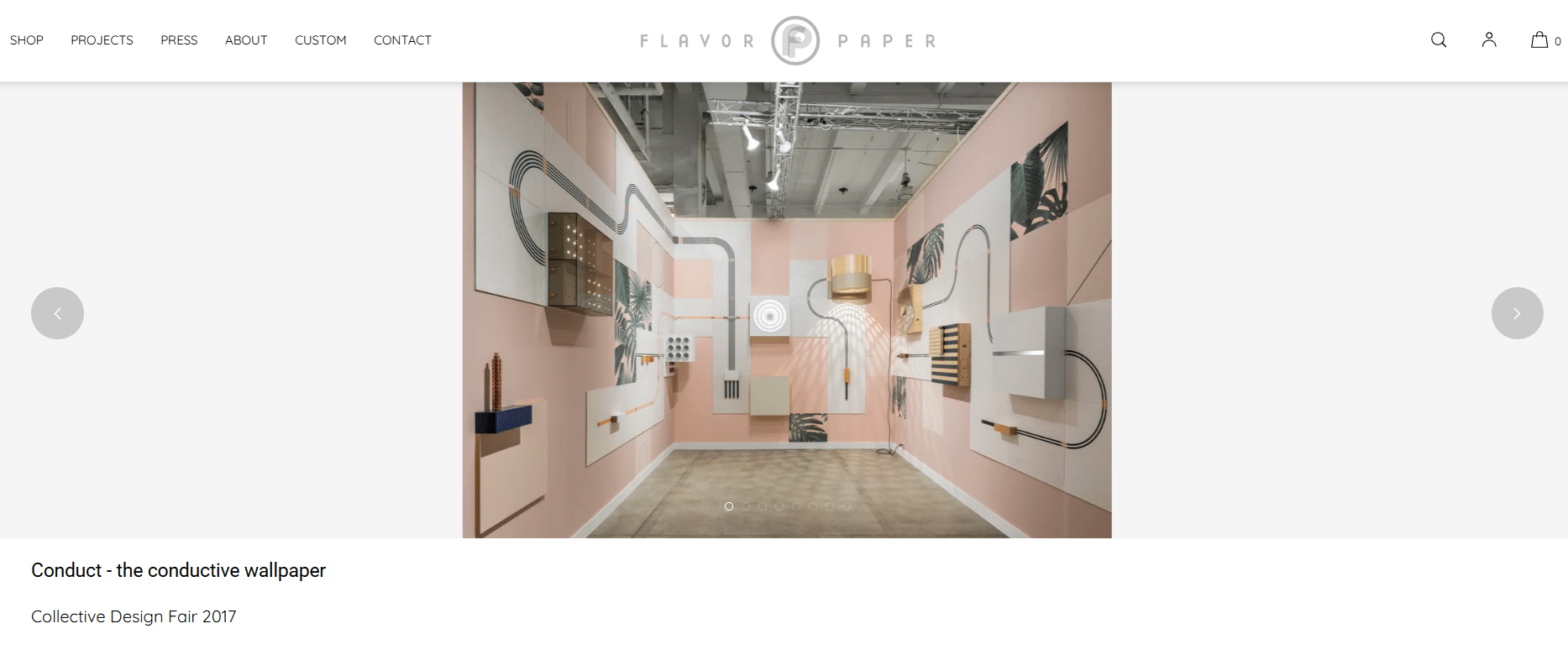
Featured image: Close-up of conductive wallpaper installation showing touch interaction or printed circuit pattern on elegant wallpaper. Link: Flavor Paper official site or project gallery for “Conduct” wallpaper Citation: “Conduct Interactive Wallpaper” by Flavor Paper & UM Project, source: “Flavor Paper”.
Conductive wallpaper, prints, and inks are transforming interior walls into interactive, functional smart surfaces. Using specialized conductive inks (silver, carbon, or graphene-based), designers print circuits directly onto wallpaper or fabrics, enabling touch control of lighting, thermostats, speakers, and more—without visible wiring.
A pioneering example is “Conduct” by Flavor Paper in collaboration with UM Project. This interactive wallpaper turns entire walls into capacitive touchpads. Tap once to dim lights, swipe to adjust volume, or draw patterns to activate scenes. The technology integrates seamlessly with existing smart-home systems while maintaining beautiful, traditional aesthetics.
Beyond interactivity, conductive inks enable heated wallpaper for localized warmth, EMI shielding, or sensor-embedded surfaces that monitor air quality and occupancy. Printed electronics reduce material use compared to traditional wiring and allow customization for any interior style.
Sustainability benefits include energy savings (precise, on-demand control), reduced copper wiring waste, and potential for recyclable or bio-based inks. Production is low-energy and scalable via standard printing methods.
Applications span residential smart homes, offices, hotels, retail, and healthcare. In commercial spaces, interactive walls enhance wayfinding or branding. Hospitals use them for touch-free controls, improving hygiene.
Challenges involve durability (addressed with protective coatings) and standardization for widespread adoption, but rapid advances in flexible electronics are accelerating progress. Future developments may include self-powered conductive surfaces harvesting ambient energy or integrating with e-ink for dynamic patterns.
These smart materials exemplify the convergence of design, electronics, and sustainability. They turn passive walls into active participants in the built environment, enhancing comfort while minimizing environmental impact.
Conductive wallpapers and inks represent the next frontier in intelligent interiors—beautiful, functional, and aligned with circular economy principles. For architects and interior designers, they offer limitless creative possibilities to create responsive, efficient, and delightful spaces. (Word count: 497)