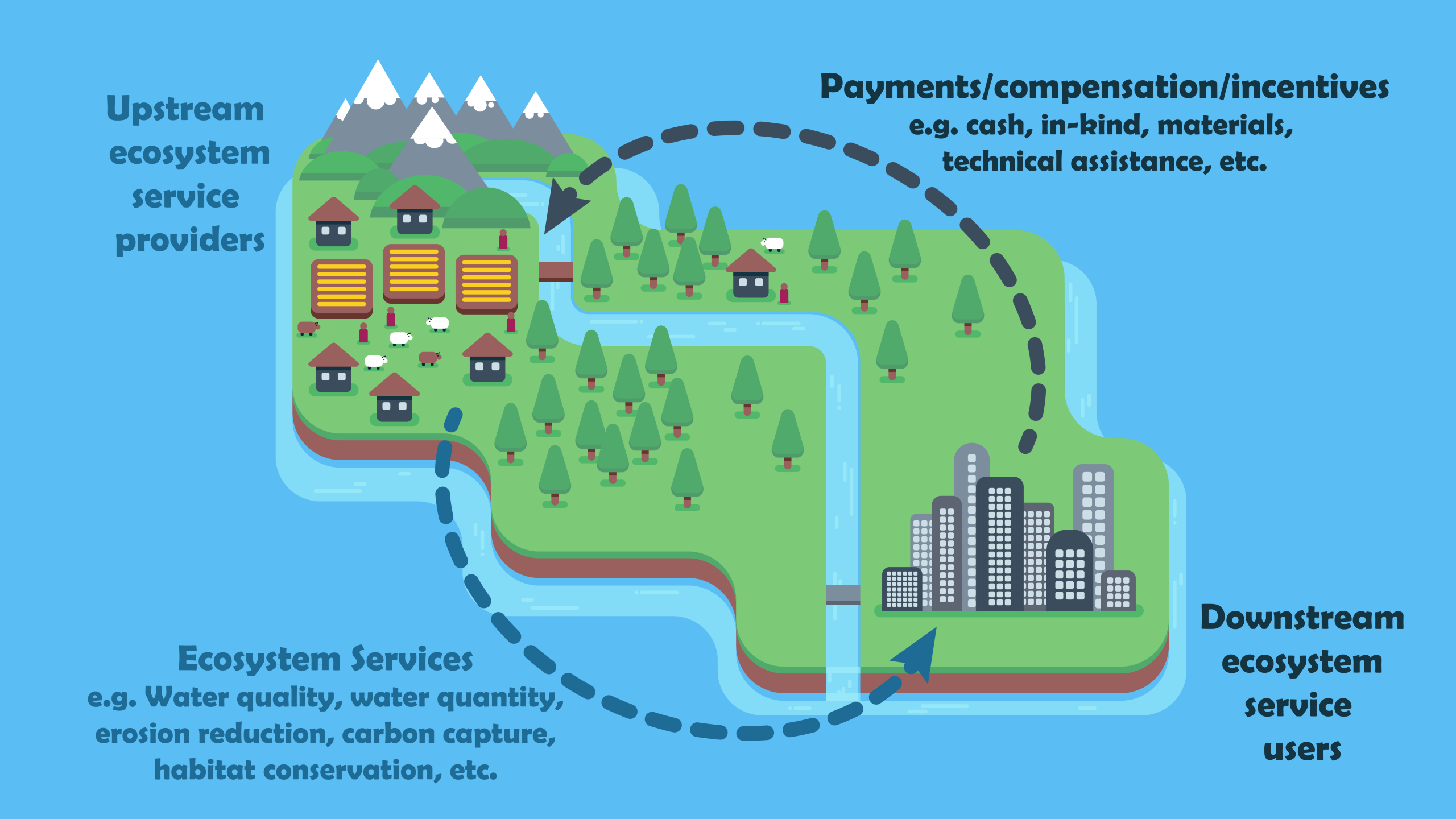
Payments for Ecosystem Services (PES), similar to the “polluter pays” concept which led to carbon credits, is a new scheme of ecosystem services valuation and protection. It belongs to the family of environmental valuation and protection solutions (broader terms: payments for conservation services, payments for environmental services), and is a much more niche concept—and for this reason, much easier to track from the perspective of users/beneficiaries (stakeholders) of ecosystem services; and to stimulate partnerships and other incentive mechanisms for the conservation and restoration of ecosystems and their services.
It aims to: – Communicate the knowledge and applications of ecosystem services and values to decision-makers at all levels and to the general public, thus building local and political support and convinced (potential) donors that the benefits of conserving, restoring, and sustainably using ecosystems usually exceed the costs. This system is “based on the twin principles that those who benefit from environmental services should pay for the service, and that those who provide the environmental services should be compensated for this.” An example of this is the reforestation campaign in Costa Rica (since 1996)—PSA (Payment for Environmental Services), where the forest area lost between 1950 and 1995 from 50% to 25% of the country’s area was financed with such incentives to reforest or protect over 8% of the national territory; the payments were made on categories of services: biodiversity preservation, water services, carbon services (sequestration), and landscape (cultural ecosystem services). Other large-scale examples include the Chinese Grain for Green program (1999, to discourage deforestation for agricultural crops) and the American Dust Bowl program, against crops on eroded land.