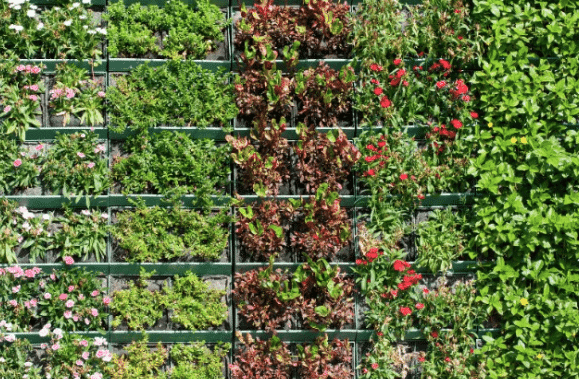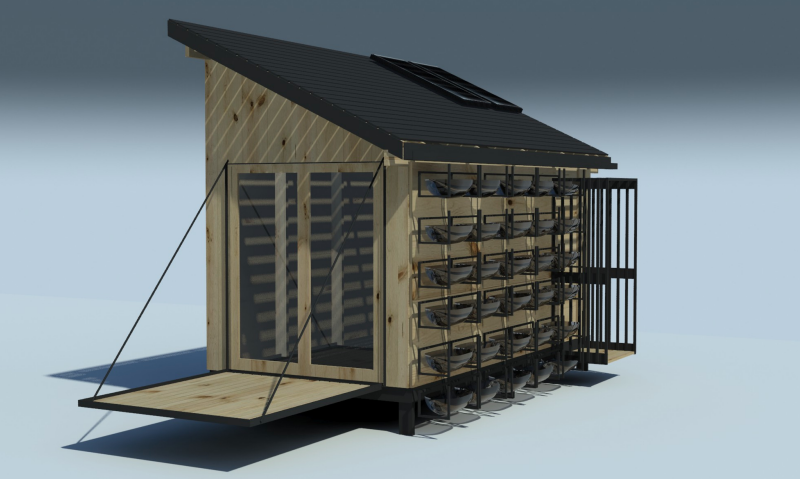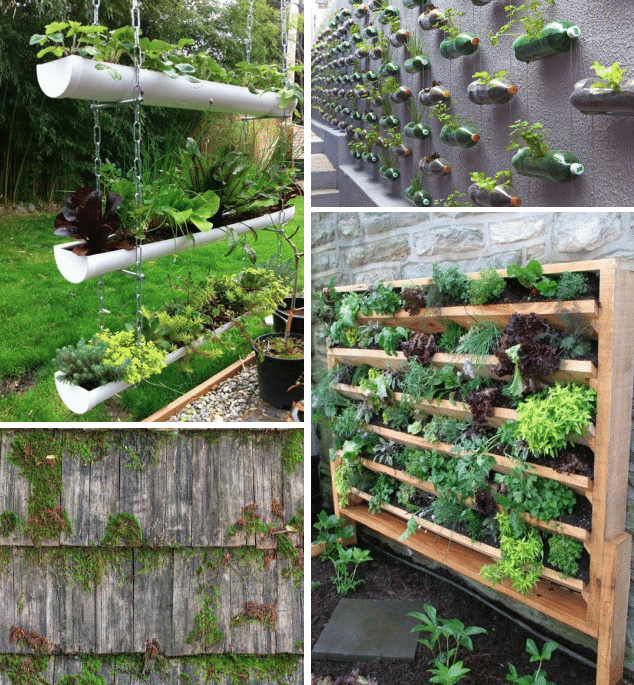
It is proposed to install a module with ecological elements for a workspace for employees of FOTO VERDE PLUS at the address of the registered office with activity (str. Căprioarelor no. 23, Breaza, Cartier Nistorești-Frăsinet, Prahova county) for photo and video activities (photographed, filmed, edited and edited on a computer, live streaming and vlogging sessions) called the ECOMODUL STUDIO FOTOVIDEO-VLOG.
• The ecological elements of the module refer AT LEAST to its envelope (exterior walls and/or roof) and/or to the internal structure of the walls – type of insulation and materials used, for sustainable development considerations.
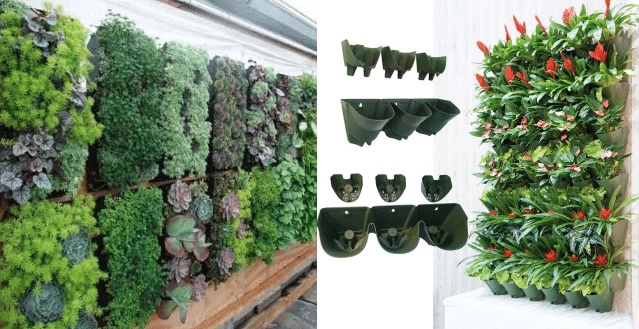
• These ecological elements will have an ecosystemic character – architectural/envelope interfaces with a multiple role of closure or isolation but which at the same time have a role similar to the way in which nature provides ecosystem services and a biophilic character or a biological system of resource circularity, in support of biodiversity and for oxygenation, purification, filtration of water, air and soil, etc., to highlight the potential of the envelope of an office space to compensate for the natural surface occupied by the footprint, by the fact that:
◦ they contain areas of spontaneous vegetation, endemic to the area, which ensure an increased level of oxygenation and uptake of harmful gases and particles from the atmosphere;
◦ medicinal plants are grown for own consumption, in pots attached to or integrated into the envelope; ◦ flowering plants are grown to help increase the population of pollinating insects;
◦ vegetables such as tomatoes, cucumbers, beans, zucchini, greens, etc. are experimentally cultivated for own consumption to exemplify and capitalize on the vertical part of the module and for this purpose;
◦ nests and modular units such as houses for birds in the area, etc.
◦ they contain areas of typical forest vegetation that purify pollutants and soil, such as moss, lichens, mushrooms specific to the site;
- To ensure autonomy and self-sufficiency in terms of energy consumption, as well as to support the transition to a low-emission economy, the module will operate accompanied by 2 photovoltaic panels and the related installations required for them, mounted either in/on the module or next to it, depending on the chosen solution and the possibilities of the space for placement.
- The mobile nature of the ecomodule refers to the possibility of moving it to another
location by road means (platform) – which limits the unit to a maximum width of
250cm – or to the possibility of dismantling and reassembling or modularizing the elements
used. - The modular and mobile nature must allow for the duplication of the example in the future, and for
this purpose a partial evaluation after implementation and an annual intermediate functioning evaluation will be made. - At least one segment of the envelope will contain elements recycled from non-hazardous waste as an experiment-test-example of their recovery into components of architectural envelopes.
- At least one segment of the enclosure must contain local closing materials such as ash wood or other types of wood, twigs, Prahova limestone, other types of stone, clay etc.
- The project can be completed during the implementation so that the adopted solutions have the most significant positive effect on the environment.
- The evolution of the natural components of the enclosure will be monitored by video through a system of surveillance cameras (at least 4) and will be measured and evaluated, including ecosystemically,
respectively highlighted and promoted, along with other results, with photo-video materials published
on the research project website purchased for the project, www.fotoverde.org. - The following pages present possible examples of enclosure components with an ecosystem role.