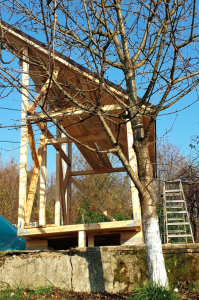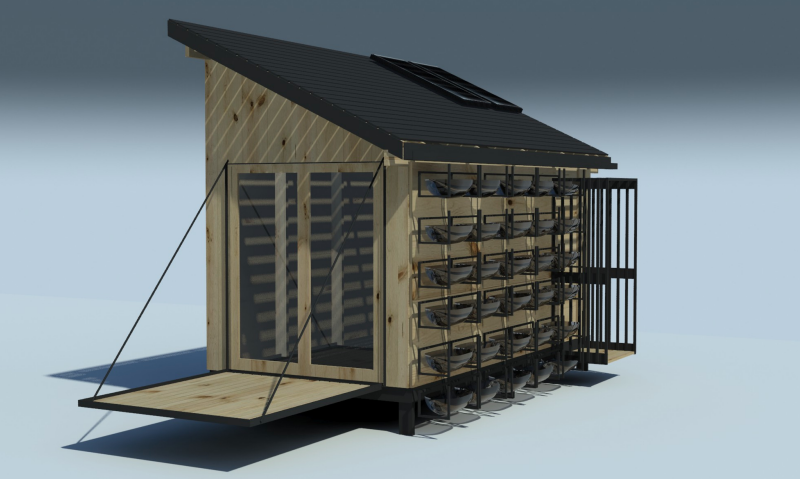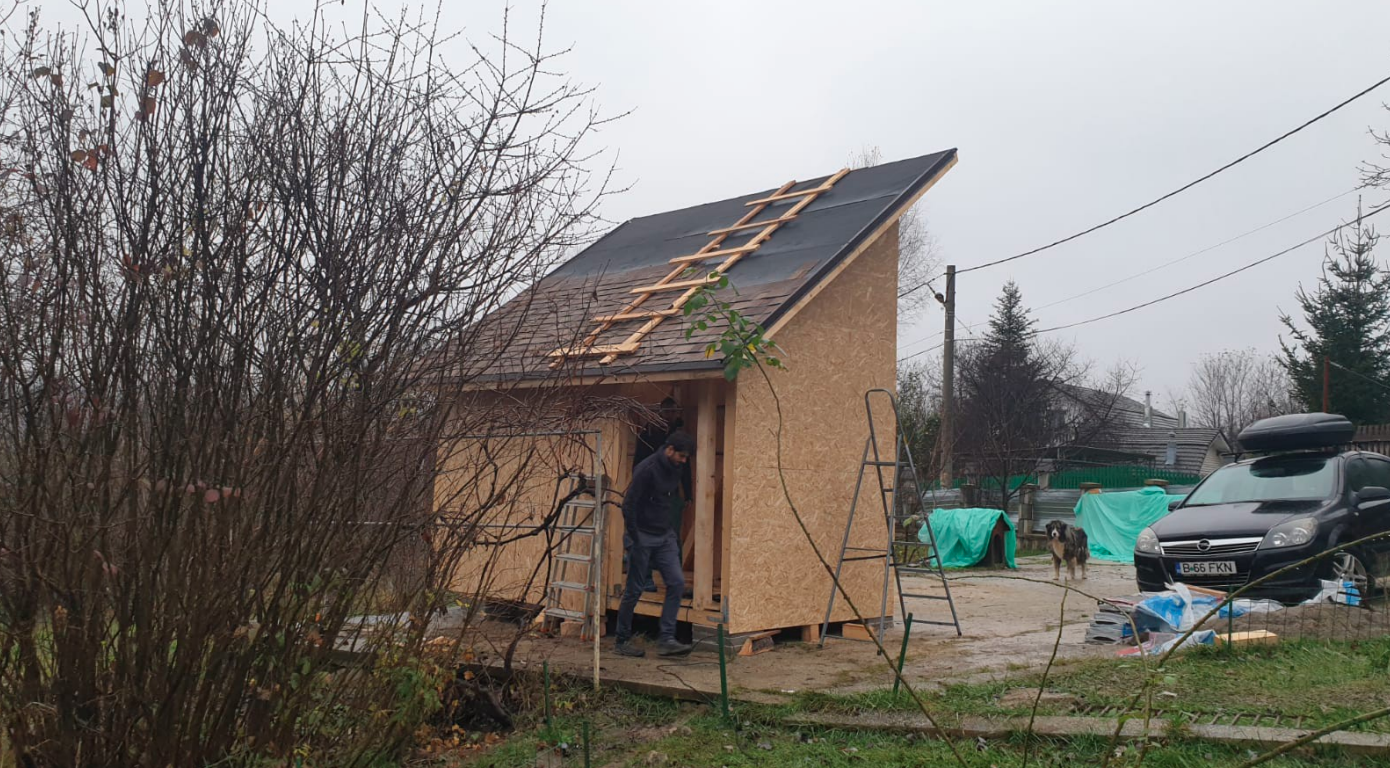
Following the analysis of all the variants studied (including the following), corroborated with the offers received, this variant of the wooden Ecomodule was selected, with a single-slope roof, the contracting, delivery and assembly of the modular unit (in the images below) being carried out in November 2019 and the layers of the envelope being scheduled for spring 2020.
Another variant considered for the implementation of the Ecomodule was the use of a container-type skeleton, complete with walls, either maritime (metal corrugated sheet metal closures) or construction site (sandwich panel closures with extruded polystyrene core).
The use of containers was mentioned in subchapter III.5.5 as a model for waste recovery,
circularity and upcycle, among the advantages of selection as a basis for the current project being
mobility (theoretical), structural stability, tightness and impermeability, the possibility of being
quickly arranged both indoors and outdoors. However, for the chosen site, in the pre-mountain area,
access is very difficult for a platform so that the mobility/transportability criterion in
this case is even problematic. Also, even if the system allows for additional ecosystemic cladding with wood vegetation and solar panels, as in the models below, the use of polystyrene-based sandwich insulation, metal walls for which large volumes of thermal insulation are required (or expensive in the case of super compact insulating panels), to which is added the cost of long-distance transport, not being a local product – especially for maritime containers – there are enough question marks not to choose this option.