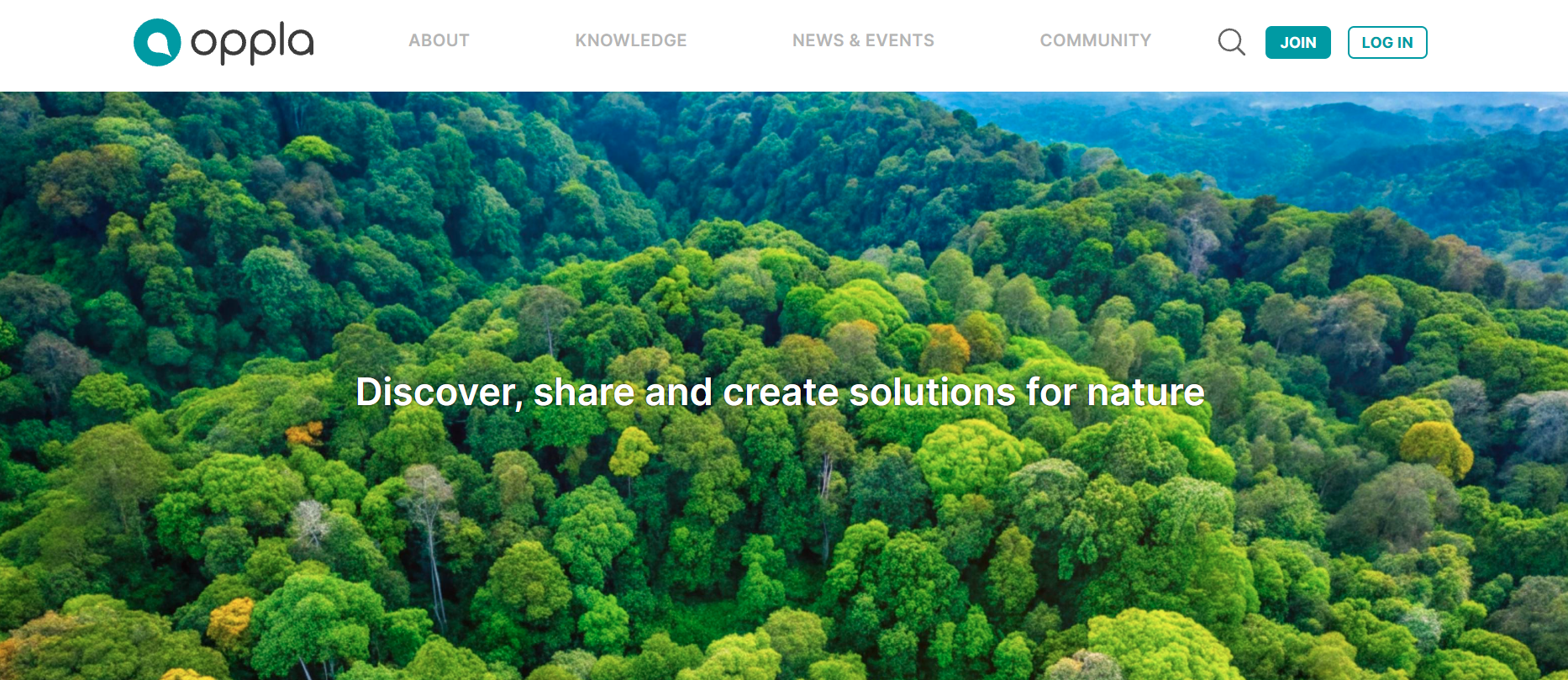
Featured image credit: Product by Oppla, source: Oppla
Oppla is an online platform that helps people find, share, and apply knowledge about nature-based solutions. It brings together research, case studies, guidance, tools, and community networks in one accessible place, making it easier to turn environmental ideas into practical action.
What Is Oppla?
Oppla is designed as a knowledge hub for nature-based solutions, natural capital, and ecosystem services. Its purpose is simple: connect science, policy, and practice so that useful environmental knowledge does not stay trapped in reports or academic papers. Instead, it becomes easier for users to explore, reuse, and apply in real projects.
The platform acts as a bridge between researchers and decision-makers. It supports users who need evidence-based answers but do not have time to search across many disconnected sources. That makes Oppla valuable for people working in climate adaptation, biodiversity, urban planning, land management, and sustainability.
Why Oppla Matters
Nature-based solutions are becoming more important as cities and regions face climate stress, ecological decline, and pressure on land and water systems. Oppla matters because it helps people find practical examples of what works, rather than relying only on theory.
By curating case studies, tools, and guidance, the platform supports better decisions at local, regional, and international levels. It also encourages collaboration across disciplines, which is essential for complex environmental challenges. A planner, scientist, policymaker, or NGO team can all use the same platform to learn from each other and build stronger solutions.
Key Features of the Platform
Oppla offers a mix of resources and community functions that make it more than a standard database. Users can browse case studies, access guidance documents, discover software and tools, and follow relevant events. This makes the platform useful both for learning and for implementation.
The platform also includes a marketplace element where knowledge products and services can be shared more widely. That helps increase visibility for projects, research outputs, and practical innovations. In addition, its networking function supports collaboration, which is especially helpful in interdisciplinary fields where teamwork matters.
Who Uses Oppla?
Oppla is built for a wide audience. Researchers use it to share their work more broadly, while public-sector professionals use it to find practical evidence for planning and policy. Consultants, NGOs, and project teams can also benefit from the platform’s resources and visibility.
Because the platform is open and free to use, it lowers the barrier to participation. That makes it especially attractive for professionals and organizations looking for reliable environmental knowledge without a complicated subscription model. Its broad accessibility is one reason it remains relevant across sectors.
How Oppla Supports Practice
One of Oppla’s biggest strengths is its focus on real-world application. A city looking for examples of urban greening, for instance, can explore case studies and resources that show how similar projects have been implemented elsewhere. A policymaker can use the platform to inform a strategy, and a researcher can promote outputs that may otherwise be hard to find.
This practical focus helps close the gap between evidence and action. In environmental work, that gap is often the main reason good ideas fail to scale. Oppla makes it easier to learn from successful examples and adapt them to new contexts.
Final Thoughts
Oppla stands out because it combines knowledge sharing, networking, and practical application in one platform. For anyone working on nature-based solutions or sustainable development, it offers a useful way to discover trusted information and connect with a wider community.
As environmental challenges become more complex, platforms like Oppla are likely to play an even bigger role. They help transform fragmented expertise into shared knowledge that can support better decisions, stronger projects, and more resilient places.