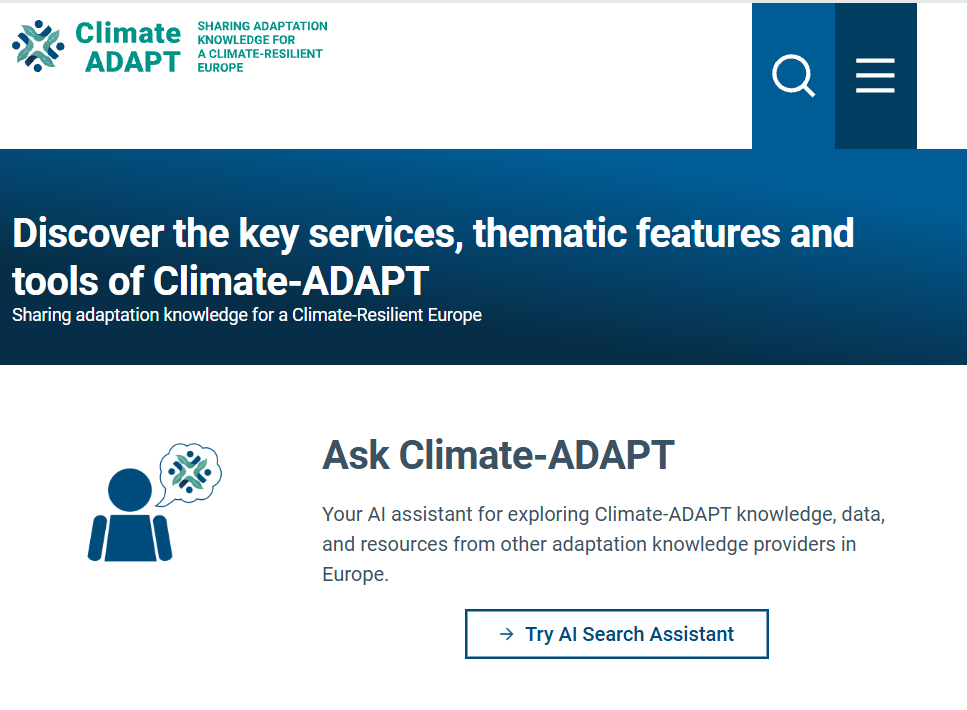
Featured image: Product by the European Environment Agency, source: Climate-ADAPT
Climate-ADAPT is the European Union’s central online platform for climate adaptation knowledge. Launched in March 2012, it helps users find data, guidance, tools, and examples that support climate resilience across Europe.
What Climate-ADAPT Is
Climate-ADAPT stands for the European Climate Adaptation Platform. It was created to support the EU Adaptation Strategy by making climate adaptation information easier to access and use. The platform is hosted by the European Environment Agency and serves as a shared reference point for policymakers, researchers, practitioners, and citizens.
The platform brings together information on climate impacts, vulnerabilities, adaptation options, and policy developments. Instead of searching across many separate sources, users can explore one structured platform that organizes knowledge in a practical way. This makes Climate-ADAPT especially useful for decision-makers who need reliable information quickly.
Why It Was Launched
Climate-ADAPT was launched in March 2012 to improve access to adaptation knowledge across Europe. At that time, adaptation planning was becoming a growing priority, but information was still fragmented and often difficult to apply in practice. The platform was designed to close that gap.
Its launch supported a broader shift in European climate policy toward preparedness and resilience. Rather than focusing only on reducing emissions, the EU also needed a way to help countries, cities, and sectors respond to unavoidable climate impacts. Climate-ADAPT became one of the main tools for that purpose.
What the Platform Offers
Climate-ADAPT includes a wide range of resources. Users can find adaptation options, country profiles, case studies, tools, research outputs, and policy information. The platform also provides links to relevant data sources and sectoral content, which helps users understand how climate risks affect different areas.
Another important feature is its focus on practical application. The platform is not just a library of reports; it is meant to help users make decisions. For example, a city planner can look for examples of urban heat adaptation, while a regional authority can explore flood-risk measures or land-use approaches.
Who Uses It
Climate-ADAPT is designed for a broad audience. Policymakers use it to support strategy and planning, while researchers use it to share and access knowledge. Regional and local authorities, consultants, NGOs, and other practitioners also use the platform to improve adaptation planning and implementation.
Because the platform is open and free to use, it is accessible to both institutions and individuals. This makes it valuable for people working in public administration as well as those involved in research, education, and environmental consulting.
Why It Matters
Climate change adaptation requires more than good intentions. It needs information, coordination, and practical examples. Climate-ADAPT matters because it provides a common European space for adaptation knowledge, helping users work with better evidence and stronger policy alignment.
The platform also supports consistency across countries and sectors. Since climate risks do not stop at national borders, shared knowledge is important for cooperation and planning. Climate-ADAPT helps create that shared basis by connecting policy, science, and practice in one place.