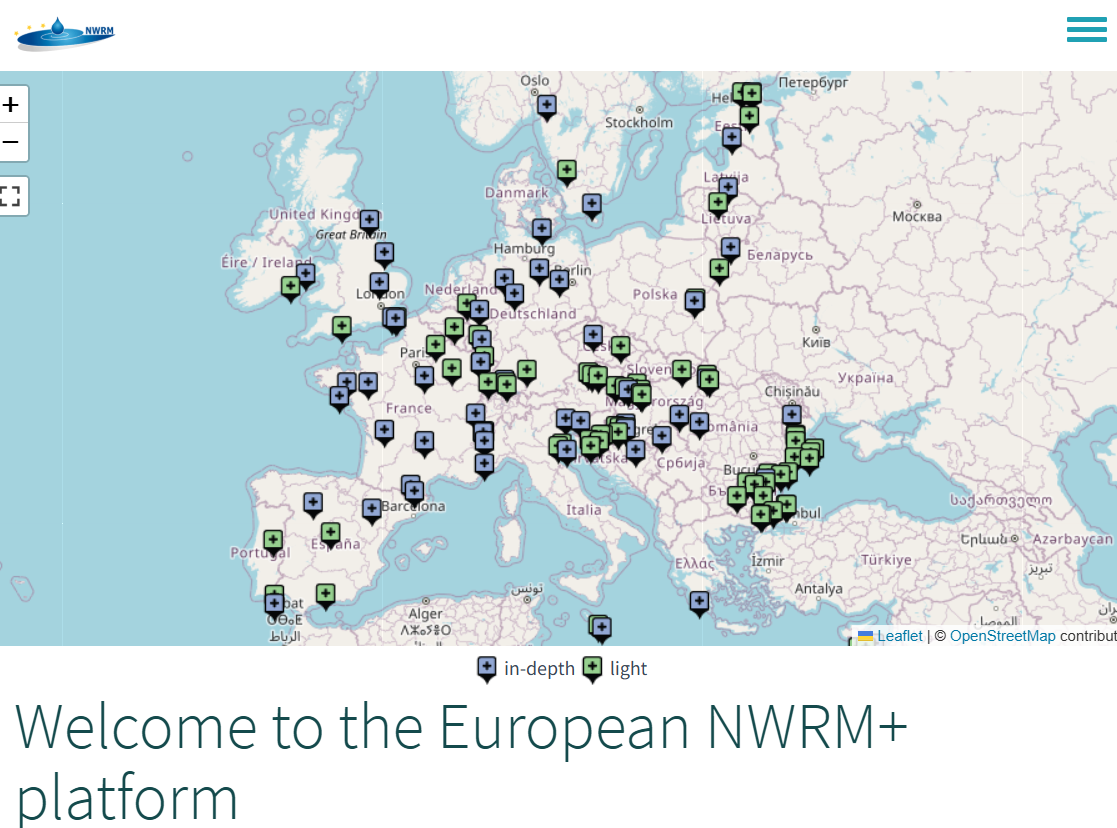
Featured image: Product by the European Commission / NWRM.eu project, source: NWRM.eu
The NWRM.eu project was a European Commission initiative focused on Natural Water Retention Measures, or NWRM. Its purpose was to build knowledge, share best practices, and support the use of nature-based water management solutions across Europe.
What NWRM Means
Natural Water Retention Measures are actions that help landscapes, soils, wetlands, rivers, and aquifers hold and slow down water more effectively. They work with natural processes rather than against them, which makes them useful for reducing flood risk, improving groundwater recharge, and easing water scarcity.
These measures are also closely linked to green infrastructure and climate adaptation. They support ecosystem restoration, biodiversity, and better water management at the same time.
What the Project Did
The NWRM project aimed to create a European knowledge platform for Natural Water Retention Measures. It developed a glossary, a catalogue of measures, a catalogue of case studies, policy questions, and a practical guide for implementation.
The project also organized regional fora and workshops to build communities of practice across Europe. These networks helped share real-world experience and adapt solutions to different climatic and hydrological conditions.
Why It Matters
NWRM matters because water management is increasingly tied to climate risk. Europe faces more intense floods, droughts, and water scarcity, and natural retention measures offer a cost-effective way to respond.
The project’s approach is important because it does not treat water, land, biodiversity, and climate as separate issues. Instead, it shows how landscape management can support all of them together. That makes NWRM useful for agriculture, urban planning, river basin management, and ecosystem restoration.
Practical Value
One of the strongest features of NWRM.eu was its practical orientation. The platform was designed to help users select, design, and implement measures in real contexts, not just study them in theory.
This makes it relevant for public authorities, engineers, environmental managers, and planners who need workable solutions for flood mitigation, groundwater recharge, and resilient landscapes. The project also helped make natural water retention more visible as a policy option within EU environmental and green infrastructure agendas.