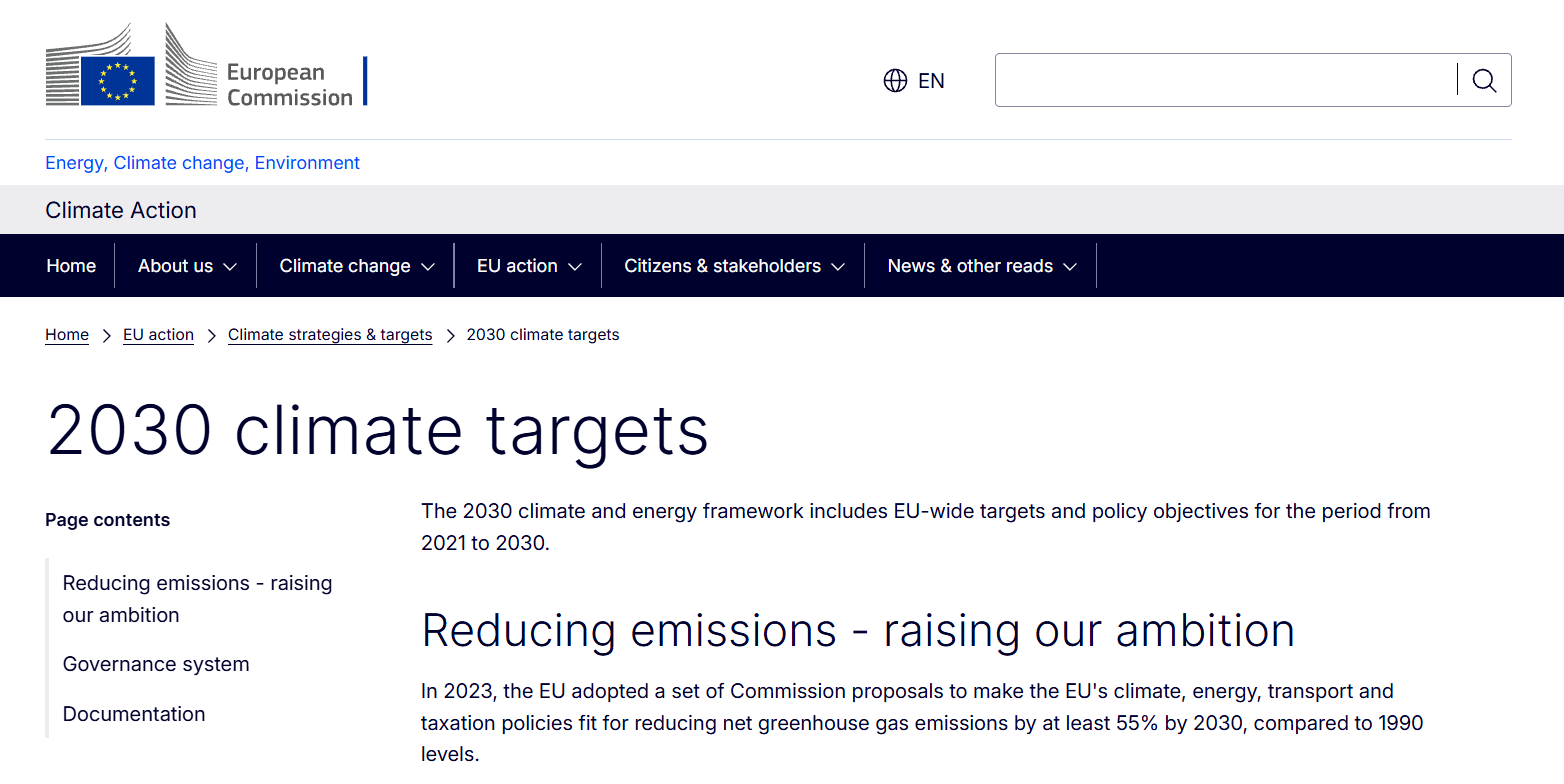
Featured image: Product by the European Commission, source: European Commission – 2030 climate targets
The EU’s 2030 Climate and Energy Framework is the European Union’s main policy package for guiding climate action, clean energy, and energy efficiency through the 2021–2030 period. It sets binding and non-binding targets that shape how member states reduce emissions, expand renewables, and improve energy performance.
What the framework is
The 2030 framework was originally adopted by the European Council in October 2014 as a strategic document for EU climate and energy policy. Its purpose was to put the EU on a cost-effective path toward its long-term climate goals, including major emission cuts by mid-century.
At the time, the framework established three central goals: at least 40% domestic greenhouse gas reduction compared with 1990 levels, at least 27% renewable energy, and at least 27% energy savings by 2030. Since then, the EU has strengthened parts of the package, especially through updated legislation and the broader European Green Deal agenda.
Why it matters
This framework matters because it links climate ambition with practical energy policy. Instead of treating emissions, electricity, heating, transport, and efficiency as separate issues, it organizes them around a single transition strategy. That makes it easier for governments and industries to plan investments and align regulations over time.
It also matters because it set the foundation for newer climate targets. The European Commission now states that the 2030 climate and energy framework supports the broader aim of reducing net greenhouse gas emissions by at least 55% by 2030 compared with 1990 levels. In other words, the original framework became the starting point for much more ambitious EU climate action.
Main targets and goals
The original framework centered on three headline targets. First, the EU committed to reducing domestic greenhouse gas emissions by at least 40% below 1990 levels by 2030. Second, it aimed for at least 27% of final energy consumption to come from renewable sources. Third, it set an indicative target of at least 27% improvement in energy efficiency, later revised upward in subsequent policy updates.
The package also included reform of the EU Emissions Trading System, with stronger emissions cuts in sectors covered by the ETS and separate reduction efforts for non-ETS sectors. The Commission’s current 2030 target page shows how the framework evolved, including the newer goal of reducing final energy consumption by at least 11.7% compared with projected use and raising the renewable-energy ambition to at least 42.5%, with a 45% aspiration.
How it works
The framework works through a combination of EU-level goals, sectoral legislation, and national implementation. Some parts are binding at EU level, while others are translated into specific obligations for member states through later laws and governance mechanisms. This approach allows the EU to keep an overall direction while letting countries adapt the details to their own energy systems.
The framework also relies on regular planning and reporting. That governance structure is important because climate policy is not a one-time decision; it requires monitoring, adjustment, and coordination across years and institutions. In practice, the framework functions as a policy backbone for cleaner electricity, better buildings, more efficient industry, and lower emissions from transport and land use.
Policy evolution
Although the 2030 framework began in 2014, it did not stay static. The targets for renewables and energy efficiency were revised upward in later legislation, reflecting faster technological change and stronger political ambition. The European Commission now frames the 2030 package as part of a wider strategy to make EU climate, energy, transport, and taxation policies fit for the 2030 decarbonization path.
Academic analysis also shows that the framework marked an important shift in EU climate law. Scholars describe it as an incremental but meaningful strengthening of climate governance, especially because it expanded procedural coordination and made the policy system more structured. That matters because climate transition is not only about setting targets; it is also about building institutions that can deliver them.
Why it is relevant today
The 2030 framework remains highly relevant because it sits between two major horizons: the EU’s 2030 targets and its 2050 climate-neutrality goal. It shapes the legislation, funding priorities, and regulatory changes that determine whether the EU can actually meet its climate commitments.
For businesses, the framework signals where Europe is heading on investment, compliance, and innovation. For cities and regions, it influences energy planning, building standards, transport policy, and adaptation measures. For researchers and policymakers, it remains a key reference point for understanding how the EU turns climate ambition into legal and administrative action.