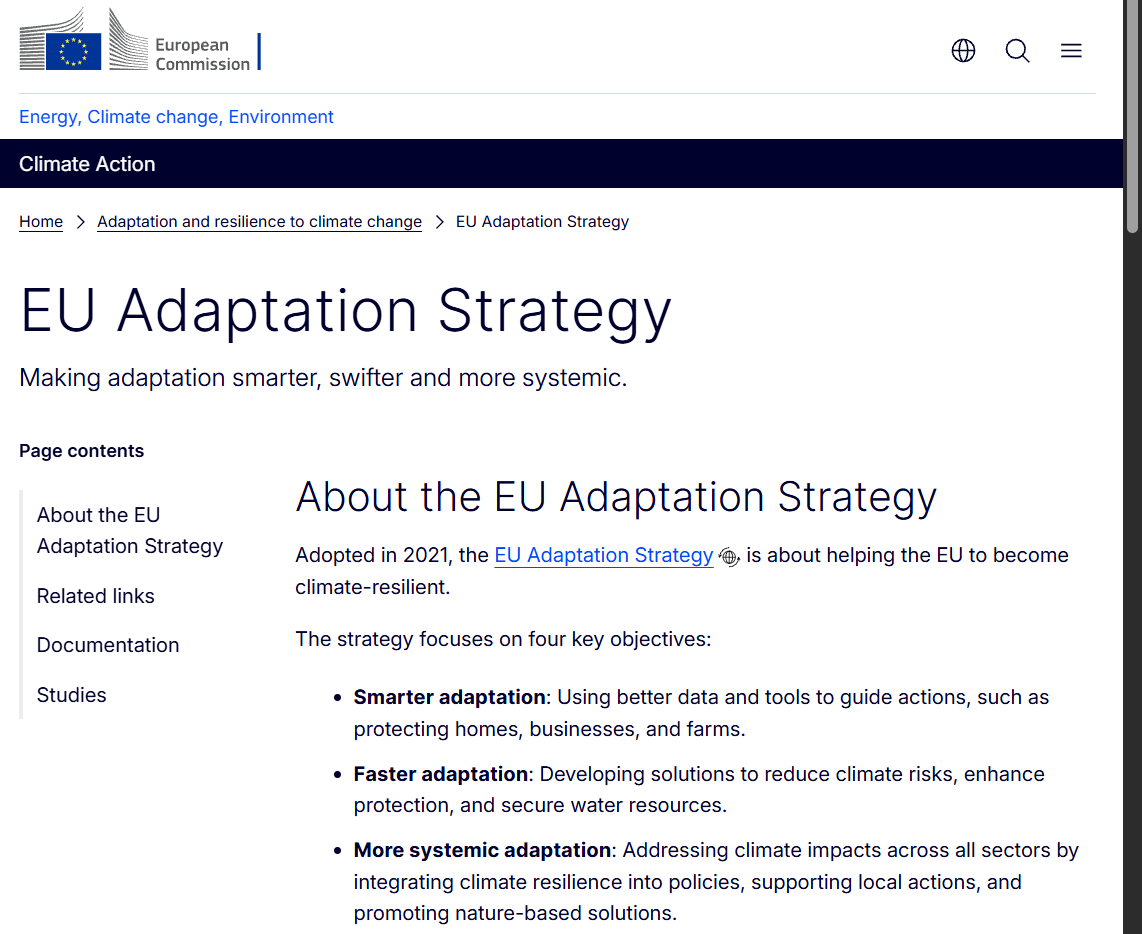
Featured image credit: Product by the European Commission, source: EU Adaptation Strategy.
The European Union’s climate adaptation strategy is built around making Europe more climate-resilient by 2050, and ecosystem-based adaptation is one of its key priorities. In practical terms, this means using nature-based solutions such as ecosystem restoration, green infrastructure, and better land and water management to reduce climate risks.
What the strategy is
The EU adopted its new adaptation strategy on 24 February 2021 as a more ambitious follow-up to the 2013 version. The strategy sets a long-term vision for Europe to become a climate-resilient society, fully adapted to the unavoidable impacts of climate change by 2050.
Its main shift is from planning to action. Instead of focusing mainly on awareness and knowledge-building, the new strategy emphasizes implementing solutions, scaling up adaptation, and making resilience part of everyday policymaking. Ecosystem-based adaptation sits at the center of that shift because it offers practical, cost-effective, and often flexible ways to reduce exposure and vulnerability.
Why ecosystem-based adaptation matters
Featured image credit: Product by the European Commission, source: EU Adaptation Strategy.
Ecosystem-based adaptation uses healthy ecosystems to help people adapt to climate change. Forests, wetlands, soils, rivers, coastal habitats, and urban green spaces can all reduce flood risk, cool cities, stabilize slopes, store water, and protect biodiversity at the same time.
The EU highlights nature-based approaches as one of three cross-cutting priorities for more systemic adaptation. That means adaptation should not be limited to a few sectors; it should be integrated across policy areas, including agriculture, water, urban planning, disaster risk management, and finance.
This approach is important because hard engineering alone cannot solve every climate problem. Ecosystems can provide multiple benefits at once, which makes them especially valuable when governments need solutions that support both climate resilience and environmental recovery.
Main goals
The 2021 strategy is built around three main objectives: smarter adaptation, faster adaptation, and more systemic adaptation. Smarter adaptation means improving data, knowledge, and risk assessment so decisions are based on stronger evidence. Faster adaptation means accelerating implementation across sectors and territories.
More systemic adaptation means embedding climate resilience into policies and investments at every level. Within that objective, the EU explicitly prioritizes nature-based solutions, alongside macro-fiscal policy and local adaptation.
The strategy also encourages international action, recognizing that climate impacts and adaptation challenges do not stop at EU borders. This broader framing is important because ecosystem-based adaptation often depends on cross-border cooperation, especially for rivers, forests, seas, and migratory species.
How the EU supports it
The European Commission says it will support member states through guidance, climate knowledge platforms, funding, and capacity-building. Climate-ADAPT is the EU’s main adaptation knowledge platform and is being expanded to help authorities and practitioners access tools, data, and examples.
The EU also channels support through major funding instruments such as the LIFE programme, the Common Agricultural Policy, structural funds, and recovery tools. These resources can help pay for ecosystem restoration, greener infrastructure, climate-proof planning, and local resilience projects.
Another key part of the strategy is better integration with other policies, such as nature restoration, water management, and land-use planning. That matters because ecosystem-based adaptation is most effective when it is embedded in long-term territorial management rather than treated as a separate environmental project.
Examples of ecosystem actions
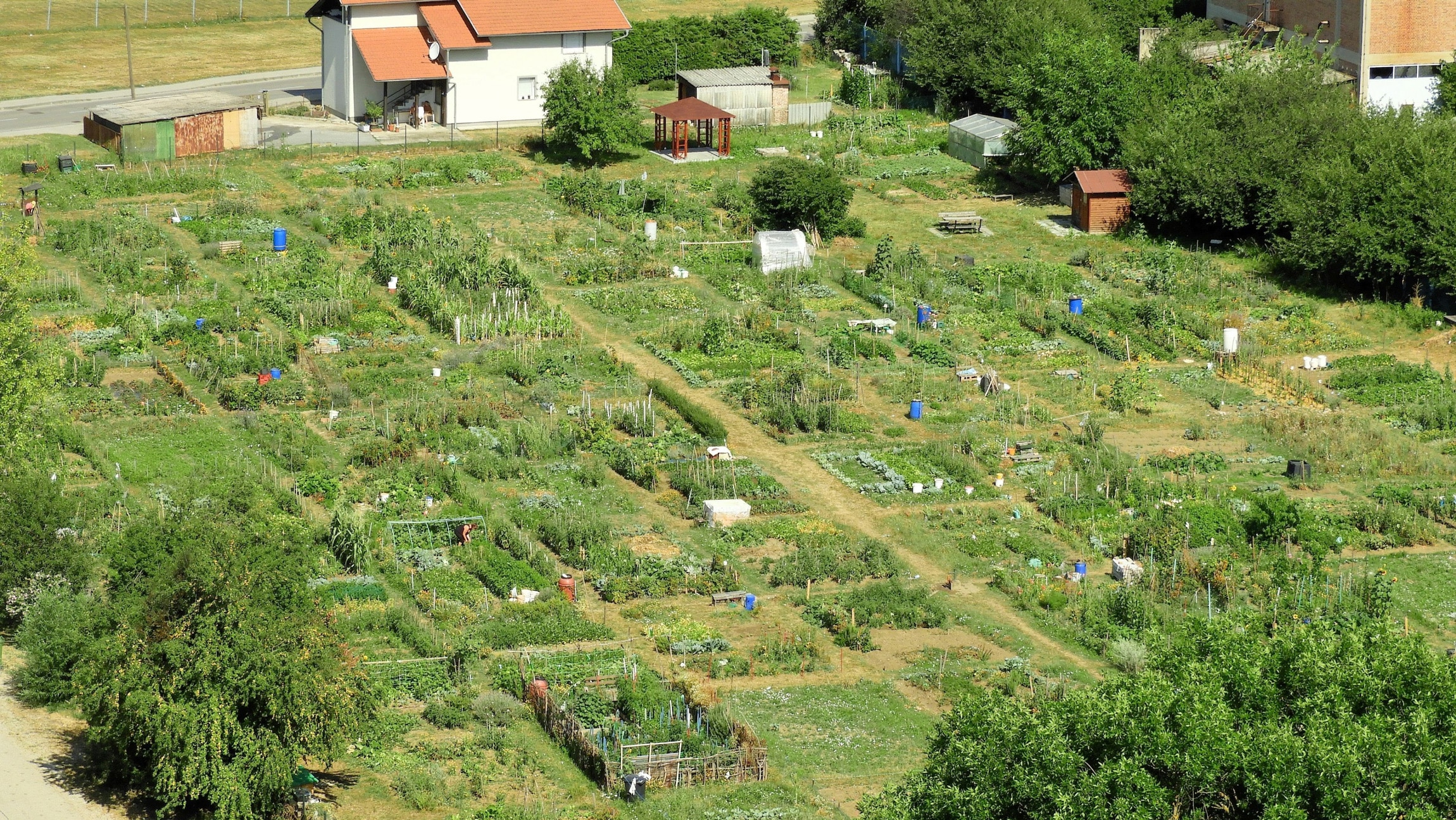
Examples of ecosystem-based adaptation include restoring wetlands to absorb floodwaters, planting urban trees to reduce heat, improving soil health to retain moisture, and reconnecting rivers with floodplains to reduce downstream risk. Coastal ecosystems such as dunes and marshes can also buffer storm surges and sea-level rise.
In rural areas, better forest management and landscape restoration can reduce wildfire risk, erosion, and drought stress. In cities, green roofs, parks, rain gardens, and permeable surfaces can make neighborhoods cooler and more resilient.
These measures are attractive because they often provide co-benefits: adaptation, biodiversity, water regulation, recreation, and better public health. That multi-benefit nature is one reason the EU treats them as a strategic priority rather than a niche option.
Why it is important now
Climate impacts are increasing, so adaptation can no longer be limited to emergency response. The EU’s strategy recognizes that Europe needs long-term resilience built into its landscapes, cities, economies, and institutions.
Ecosystem-based adaptation is important now because it can be scaled alongside restoration and land stewardship goals. In other words, the same measure can support climate adaptation and environmental recovery at the same time.
For Europe, that makes the strategy both a climate policy and a nature policy. It points toward a future where healthy ecosystems are treated as essential infrastructure for resilience, not just as protected scenery.