Project Citation Source: CORDIS Project Profile – European Commission Grant ID: 308417
Introduction
The Marmara Sea region in Turkey sits at a volatile geographical and tectonic crossroads. As one of the most densely populated areas in Europe and the Mediterranean, it faces an exceptionally high level of seismic hazard. Following the catastrophic 1999 İzmit earthquake, earth scientists identified a critical “seismic gap” along the western portion of the 1,000 km-long North Anatolian Fault Zone (NAFZ)—running directly beneath the floor of the Marmara Sea.
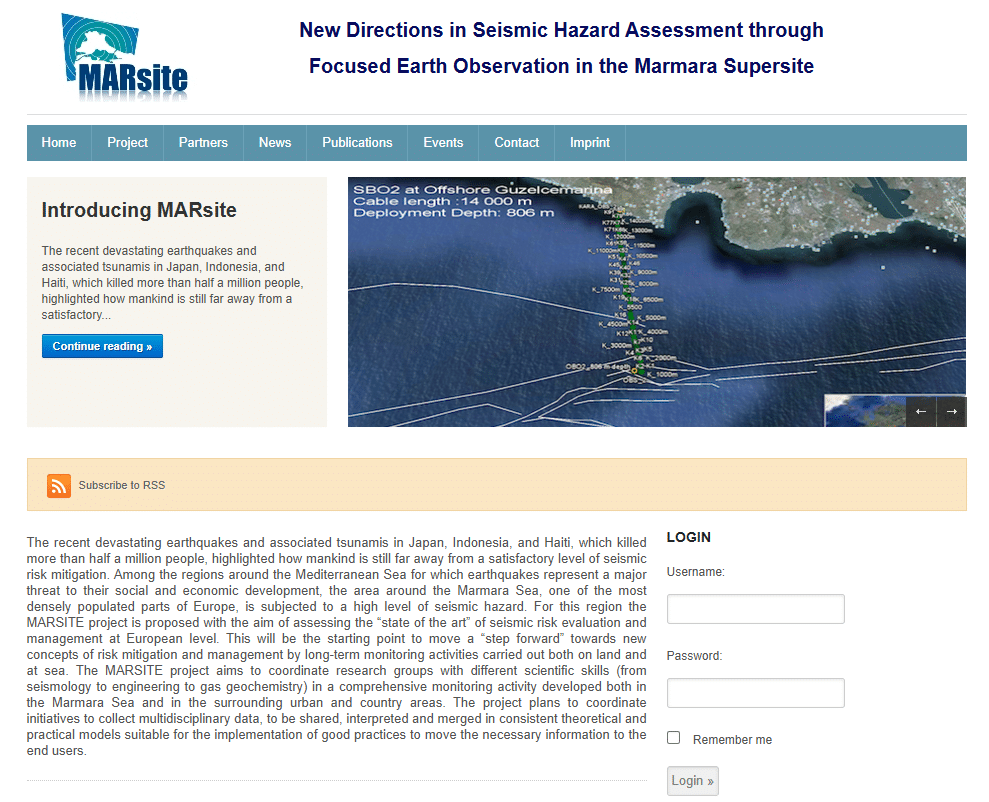
To confront this pressing hazard, the European Union launched the MARSITE project (“New Directions in Seismic Hazard assessment through Focused Earth Observation in the Marmara Supersite”). Funded under the Seventh Framework Programme (FP7), this collaborative initiative united an interdisciplinary network of seismologists, engineers, and gas geochemists to integrate data from space, land, and sea into a cohesive mitigation network.
Project Scope: A Unified Earth Observation Strategy
The fundamental scope of MARSITE was to assess the existing state-of-the-art in regional seismic risk management and advance toward a continuous, long-term monitoring paradigm. Instead of analyzing geological hazards in isolated academic vacuums, MARSITE set out to harmonize geological, geophysical, geodetic, and geochemical observations to capture a comprehensive picture of crustal deformation.
“The overriding objective of MARSITE was to establish the Marmara region as an international ‘Supersite,’ building a level of data fusion where distinct space, land, and marine observations actively reinforce and validate one another.”
Key Methodological Pillars
- Space-Land-Sea Integration: Combining satellite radar and earth observation data with deep land-based instrumentation and submarine seafloor networks.
- Multi-Parameter Monitoring: Tracking micro-seismicity alongside secondary physical signs, including subsea fluid expulsion, heat flow, and gas emissions.
- Early Warning Optimization: Upgrading existing algorithms and sensor nodes to maximize the trigger time for rapid-response systems protecting the metropolitan infrastructure of Istanbul.
Core Infrastructure & Key Deliverables
MARSITE successfully shifted regional monitoring from scattered, episodic measurements to an automated, high-density data pipeline. The project engineered, verified, and deployed several landmark deliverables across the fault zone:
| Technology / Deliverable | Technical Functionality | Strategic Implementation |
| Borehole Seismic Observatory | A deep subsurface observatory combining multi-disciplinary seismic instruments at depth. | Monitoring micro-faulting and tectonic loading beneath the surface layer |
| Borehole Dilatometer | A precision instrument designed to measure highly minute, localized rock volume changes. | Detecting pre-seismic strain anomalies and crustal stress accumulation |
| MAGNET Network Upgrade | Modernizing the existing infrastructure of the continuous Global Positioning System (GPS) array. | Tracking real-time surface displacement across 22 modernized stations |
| Seafloor Multi-Parameter Nodes | Submarine observation platforms measuring gas emissions and fluid activity within the underwater fault. | Continuous monitoring of active submerged fault segments |
| Tsunami Scenario Database | A digitized predictive modeling bank analyzing coastal wave propagation and landslide-trigger mechanisms. | Enhancing municipal civil defense and emergency evacuation plans |
Project Reporting & Technical Benchmarks
The continuous monitoring and modeling data compiled during the reporting phases of the MARSITE project yielded vital, actionable benchmarks for global seismic risk policies:
- High Catastrophic Probability: Long-term geodetic rate forecasting and stress-transfer analysis confirmed that the Marmara region faces an estimated probability in excess of 65% for a major, destructive earthquake within the next 30 years.
- Network Cost Reductions: Validation trials of the newly installed borehole seismic observatory and dilatometer proved so high-fidelity that future regional networks can achieve identical observation accuracy using a significantly smaller number of total stations, heavily driving down national infrastructure costs.
- 2,000-Year Historical Re-Audit: The project systematically revised historical earthquake catalogs and intensity maps spanning over two millennia. This localized auditing clarified that while Istanbul is affected by medium-intensity events every 50 years on average, high-intensity events recur roughly every 250 to 300 years (with the last major high-intensity shock occurring in 1766).
- Accelerated Source Solutions: By establishing real-time data loops with major European emergency networks, the project enabled the immediate delivery of high-quality, rapid source-mechanism solutions and slip models to disaster management authorities during seismic anomalies.
By building a highly sophisticated, multi-layered observation matrix over one of the world’s most critical seismic boundaries, MARSITE established a resilient framework that continues to safeguard vulnerable urban communities.